 tracken
Do & Co Aktienkurs



📊 Peer Group
📈 Was ist das?
Die Peer Group sind die Unternehmen mit dem ähnlichsten Geschäftsmodell. Sie dienen als Vergleichsmaßstab, um eine Aktie einzuordnen.
🧮 Wie wird sie ausgewählt?
Nach Ähnlichkeit des Geschäftsmodells, also Unternehmen aus derselben Branche, mit vergleichbaren Produkten und einer ähnlichen Kundengruppe. Nur so vergleichst du Äpfel mit Äpfeln.
🏛️ Wofür ist sie wichtig?
Ob eine Aktie günstig oder teuer ist, lässt sich am ehesten im Vergleich beurteilen. Ein KGV von 18 oder ein EV/FCF von 20 wirkt je nach Maßstab günstig oder teuer. Die Peer Group liefert dabei den treffsichersten Maßstab: Unternehmen mit ähnlichem Geschäftsmodell, die denselben Bedingungen unterliegen.
🎯 Was bedeutet das für Anleger?
Liegt eine Kennzahl unter dem Peer-Durchschnitt, ist die Aktie relativ günstiger bewertet, über dem Durchschnitt entsprechend teurer. Ein Abschlag zur Peer Group kann eine Chance sein, aber auch einen Grund haben (zum Beispiel geringeres Wachstum). Der Vergleich ist ein Startpunkt, kein Urteil.
Jetzt kostenlos registrieren, um einen Alarm für die Do & Co Aktie zu aktivieren.
Aktiviere Alarme zum Aktienkurs, zur Dividendenrendite, zur Bewertung (z. B. KGV oder EV/Sales) oder zu Strategie-Scores und lehne Dich entspannt zurück.
aktien.guide Basis
Kennzahlen
📘 Marktkapitalisierung
📈 Was ist das?
Die Marktkapitalisierung zeigt, wie viel ein Unternehmen laut Börse aktuell wert ist.
🧮 Wie wird es berechnet?
🏛️ Wofür ist es wichtig?
Sie hilft Unternehmen in Größenklassen (Large, Mid, Small Cap) einzuordnen und gibt Hinweise auf Marktmacht und Stabilität.
🧮 Berechnung
🎯 Was bedeutet das für Anleger?
- Große Unternehmen gelten als stabiler, zahlen oft Dividenden, wachsen aber langsamer.
- Kleine Firmen können stärker wachsen, sind aber schwankungsanfälliger.
- Die Marktkapitalisierung ist ein guter Indikator für Unternehmensgröße, aber kein Maß für Unter- oder Überbewertung.
📘 Enterprise Value (Unternehmenswert)
📈 Was ist das?
Der Enterprise Value (EV) zeigt, was ein Unternehmen tatsächlich kostet, wenn man es komplett übernehmen würde – inklusive Schulden und abzüglich Cash.
🧮 Wie wird es berechnet?
(= Marktkapitalisierung + Nettoverschuldung)
🏛️ Wofür ist es wichtig?
Der EV ist eine realistischere Bewertungsbasis als die Marktkapitalisierung, da er die Kapitalstruktur berücksichtigt. Er ist Grundlage für Kennzahlen wie EV/FCF oder EV/Sales.
🧮 Berechnung
🎯 Was bedeutet das für Anleger?
- Der Enterprise Value zeigt, was ein Unternehmen tatsächlich wert ist – unabhängig davon, wie es finanziert ist.
- Er ist besonders wichtig für professionelle Investoren, da er eine objektivere Grundlage für Bewertungsvergleiche bietet als die Marktkapitalisierung allein.
- Ein Unternehmen mit hoher Verschuldung erscheint im EV teurer, eines mit viel Cash günstiger – auch wenn sie an der Börse gleich viel wert sind.
📘 Nettoverschuldung
📈 Was ist das?
Die Nettoverschuldung zeigt, wie viele Schulden nach Abzug des verfügbaren Cashs tatsächlich verbleiben.
🧮 Wie wird es berechnet?
🏛️ Wofür ist es wichtig?
Sie zeigt, wie stark ein Unternehmen von Fremdkapital abhängig ist – und wie gut es in der Lage ist, seine Schulden kurzfristig zu bedienen.
🧮 Berechnung
🎯 Was bedeutet das für Anleger?
- Eine niedrige oder negative Nettoverschuldung bedeutet hohe finanzielle Stabilität.
- Unternehmen mit viel Cash und geringer Verschuldung sind besser gerüstet für Krisen.
- Eine hohe Nettoverschuldung erhöht das Risiko – besonders bei steigenden Zinsen oder konjunkturellen Schwächen.
📘 Cash
📈 Was ist das?
Der Cashbestand zeigt, wie viele liquide Mittel einem Unternehmen sofort zur Verfügung stehen.
🧮 Wie wird es berechnet?
🏛️ Wofür ist es wichtig?
Er gibt Auskunft über die finanzielle Flexibilität: Ein hoher Cashbestand ermöglicht Investitionen, Rückkäufe oder Krisenresistenz.
🧮 Berechnung
🎯 Was bedeutet das für Anleger?
- Ein hoher Cashbestand zeigt finanzielle Stärke und Handlungsspielraum.
- Cash kann für Investitionen, Schuldentilgung oder Aktienrückkäufe genutzt werden.
- Allerdings: Zu viel ungenutztes Kapital kann auch auf mangelnde Investitionsideen hinweisen.
📘 Anzahl ausstehender Aktien
📈 Was ist das?
Die Anzahl ausstehender Aktien gibt an, wie viele Aktien eines Unternehmens aktuell im Umlauf sind und von Investoren gehalten werden.
🧮 Wie wird es berechnet?
🏛️ Wofür ist es wichtig?
Sie ist die Grundlage für viele Kennzahlen wie Gewinn je Aktie (EPS), Marktkapitalisierung oder KGV.
🧮 Berechnung
🎯 Was bedeutet das für Anleger?
- Je weniger Aktien im Umlauf sind, desto höher fällt z. B. der Gewinn je Aktie aus – wichtig für Bewertung und Dividendenrendite.
- Aktienrückkäufe verringern die Anzahl ausstehender Aktien – und steigern den Wert je Aktie.
- Kapitalerhöhungen haben den gegenteiligen Effekt: mehr Aktien → Verwässerung der bestehenden Anteile.
📘 Kurs-Gewinn-Verhältnis (KGV)
📈 Was ist das?
Das KGV zeigt, wie oft der Gewinn pro Aktie im aktuellen Aktienkurs enthalten ist – also wie „teuer“ eine Aktie im Verhältnis zum Gewinn ist.
🧮 Wie wird es berechnet?
🏛️ Wofür ist es wichtig?
Das KGV gehört zu den bekanntesten Bewertungskennzahlen. Es hilft Anlegern einzuschätzen, ob eine Aktie im Vergleich zu ihrem Gewinn eher günstig oder teuer erscheint.
🧮 Berechnung
📊 KGV (TTM) = bezogen auf den Gewinn der letzten 12 Monate (Trailing Twelve Months):🎯 Was bedeutet das für Anleger?
- Ein niedriges KGV kann auf eine günstige Bewertung hindeuten – oder auf Probleme im Geschäftsmodell.
- Ein hohes KGV kann Wachstumserwartungen widerspiegeln – oder eine überbewertete Aktie.
📘 Kurs-Umsatz-Verhältnis (KUV)
📈 Was ist das?
Das KUV zeigt, wie viel Anleger für 1 € Umsatz eines Unternehmens zahlen – unabhängig vom Gewinn.
🧮 Wie wird es berechnet?
🏛️ Wofür ist es wichtig?
Das KUV ist besonders bei wachstumsstarken oder noch nicht profitablen Unternehmen hilfreich. Es zeigt, wie hoch der Umsatz an der Börse bewertet wird.
🧮 Berechnung
Marktkapitalisierung = 2,20 Mrd. € | Umsatz (TTM) = 2,49 Mrd. €
Marktkapitalisierung = 2,20 Mrd. € | Umsatz erwartet = 2,69 Mrd. €
🎯 Was bedeutet das für Anleger?
- Ein niedriges KUV kann auf Unterbewertung hindeuten – oder auf schwache Margen.
- Ein hohes KUV kann hohe Erwartungen widerspiegeln – oder übermäßigen Optimismus.
- Besonders sinnvoll bei Wachstumsunternehmen, bei denen der Gewinn oder Free Cashflow (noch) keine Aussagekraft hat.
📘 Unternehmenswert zu Umsatz (EV/Sales)
📈 Was ist das?
EV/Sales zeigt, wie viel Anleger für 1 € Umsatz eines Unternehmens zahlen, wenn man auch Schulden und Cash berücksichtigt – es ist eine kapitalstrukturbereinigte Version des KUV.
🧮 Wie wird es berechnet?
🏛️ Wofür ist es wichtig?
Diese Kennzahl eignet sich besonders für den Vergleich von Unternehmen mit unterschiedlicher Verschuldung – sie zeigt, wie teuer ein Unternehmen tatsächlich im Verhältnis zum Umsatz ist.
🧮 Berechnung
Enterprise Value = 2,17 Mrd. € | Umsatz (TTM) = 2,49 Mrd. €
Enterprise Value = 2,17 Mrd. € | Umsatz erwartet = 2,69 Mrd. €
🎯 Was bedeutet das für Anleger?
- EV/Sales ist neutral gegenüber der Kapitalstruktur und eignet sich gut für Unternehmensvergleiche.
- Ein niedriges Verhältnis kann auf eine günstig bewertete Aktie hindeuten – ein hohes Verhältnis auf hohe Erwartungen oder Überbewertung.
- Besonders nützlich bei wachstumsstarken, noch nicht profitablen Firmen.
📘 Unternehmenswert zu Free Cashflow (EV/FCF) | ex SBC
📈 Was ist das?
EV/FCF setzt den Unternehmenswert eines Unternehmens ins Verhältnis zu seinem Free Cashflow. Die Kennzahl zeigt damit, mit welchem Vielfachen des aktuellen Free Cashflows ein Unternehmen bewertet wird. EV/FCF ex SBC berücksichtigt zusätzlich aktienbasierte Vergütungen (Stock-Based Compensation, SBC). SBC verursacht zwar keinen direkten Cash-Abfluss, kann bestehende Aktionäre jedoch durch die Ausgabe zusätzlicher Aktien verwässern. Deshalb wird SBC bei dieser Variante vom Free Cashflow abgezogen.
🧮 Wie wird es berechnet?
EV/FCF ex SBC = Enterprise Value ÷ (Free Cashflow (TTM) − SBC)
🏛️ Wofür ist es wichtig?
EV/FCF ermöglicht eine Bewertung auf Basis des Free Cashflows und ergänzt damit gewinnbasierte Bewertungskennzahlen wie das KGV. Die Variante ex SBC berücksichtigt zusätzlich die wirtschaftliche Belastung durch aktienbasierte Vergütungen und ermöglicht dadurch eine konservativere Betrachtung aus Sicht der Aktionäre.
🧮 Berechnung
🎯 Was bedeutet das für Anleger?
- Ein niedriges EV/FCF bedeutet, dass der Unternehmenswert im Verhältnis zum aktuellen Free Cashflow niedrig ist. Die Ursachen dafür sollten jedoch immer im Unternehmens- und Branchenkontext betrachtet werden.
- Ein hohes EV/FCF bedeutet, dass der Unternehmenswert im Verhältnis zum aktuellen Free Cashflow hoch ist. Das kann beispielsweise auf hohe Wachstumserwartungen oder eine vorübergehend schwache Cash-Generierung zurückzuführen sein.
- Bei positiver SBC und positivem bereinigtem Free Cashflow fällt EV/FCF ex SBC in der Regel höher aus als das klassische EV/FCF.
- Besonders aussagekräftig ist die Kennzahl bei Unternehmen mit relativ stabilen und gut einschätzbaren Cashflows.
- Bei negativem oder sehr niedrigem Free Cashflow ist EV/FCF nur eingeschränkt aussagekräftig und sollte nicht wie ein gewöhnliches Bewertungsmultiple interpretiert werden.
📘 Kurs-Buchwert-Verhältnis (KBV)
📈 Was ist das?
Das KBV zeigt, wie hoch der Marktwert eines Unternehmens im Verhältnis zu seinem bilanziellen Eigenkapital ist.
🧮 Wie wird es berechnet?
🏛️ Wofür ist es wichtig?
Das KBV ist besonders bei Substanzwerten (z. B. Banken, Industrie) relevant. Es hilft Anlegern zu erkennen, ob ein Unternehmen unter oder über seinem buchhalterischen Vermögen bewertet ist.
🧮 Berechnung
🎯 Was bedeutet das für Anleger?
- Ein KBV unter 1 kann auf Unterbewertung oder schwache Rentabilität hindeuten.
- Ein KBV über 1 zeigt, dass der Markt dem Unternehmen Mehrwert über den Buchwert hinaus zuschreibt (z. B. Marken, Patente, Wachstum).
- Das KBV eignet sich besonders gut für Unternehmen mit stabilen, materiellen Vermögenswerten.
📘 Dividende je Aktie
📈 Was ist das?
Die Dividende je Aktie zeigt, wie viel Geld ein Unternehmen pro Aktie an seine Aktionäre ausschüttet – typischerweise jährlich oder quartalsweise.
🧮 Wie wird es berechnet?
🏛️ Wofür ist es wichtig?
Sie ist die absolute Größe der Auszahlung je Aktie – wichtig für alle, die regelmäßige Erträge suchen oder Dividendenstrategien verfolgen.
🧮 Berechnung
🎯 Was bedeutet das für Anleger?
- Eine stabile oder wachsende Dividende je Aktie ist oft ein Zeichen für ein solides Geschäftsmodell.
- Die Dividende je Aktie allein sagt aber nichts über die Rendite – dafür ist auch der Aktienkurs relevant (→ Dividendenrendite).
- Langfristig steigende Dividenden sind oft ein sehr gutes Merkmal (z. B. Dividenden-Aristokraten).
📘 Dividendenrendite
📈 Was ist das?
Die Dividendenrendite zeigt, wie hoch die Dividende eines Unternehmens im Verhältnis zum Aktienkurs ist.
🧮 Wie wird es berechnet?
🏛️ Wofür ist es wichtig?
Sie hilft dabei, Dividendenaktien vergleichbar zu machen – unabhängig vom absoluten Auszahlungsbetrag.
🧮 Berechnung
🎯 Was bedeutet das für Anleger?
- Eine stabile Dividendenrendite kann auf verlässliche Ausschüttungen hinweisen.
- Ein Vergleich der 1J- und 5J-Rendite hilft zu erkennen, ob das Dividendenwachstum mit dem Kurswachstum Schritt hält.
- Eine niedrige Rendite ist nicht zwingend negativ – sie kann auf starkes Kurswachstum hindeuten.
📘 Dividendenwachstum
📈 Was ist das?
Das Dividendenwachstum zeigt, wie stark ein Unternehmen seine Dividende je Aktie über die Zeit gesteigert hat.
🧮 Wie wird es berechnet?
5J: durchschnittliche jährliche Wachstumsrate (CAGR)
🏛️ Wofür ist es wichtig?
Stetig steigende Dividenden gelten als Zeichen für finanzielle Stärke und Aktionärsorientierung – besonders interessant für langfristige Investoren.
🧮 Berechnung
🎯 Was bedeutet das für Anleger?
- Ein stabiles Dividendenwachstum ist ein Zeichen nachhaltiger Ertragskraft.
- Ein hohes Dividendenwachstum kann ein erheblicher Hebel deiner Rendite sein:
- Wenn ein Unternehmen z. B. 1 € Dividende zahlt und diese über 5 Jahre jährlich um 15 % erhöht, bekommst du im 5. Jahr bereits 2 € je Aktie – doppelt so viel wie zu Beginn!
📘 Ausschüttungsquote (Payout)
📈 Was ist das?
Die Ausschüttungsquote zeigt, wie viel Prozent des Unternehmensgewinns (pro Aktie) als Dividende an die Aktionäre ausgeschüttet wird.
🧮 Wie wird es berechnet?
🏛️ Wofür ist es wichtig?
Die Quote hilft einzuschätzen, ob eine Dividende auf Dauer tragfähig ist – besonders im Verhältnis zum erzielten Gewinn.
🧮 Berechnung
🎯 Was bedeutet das für Anleger?
- Eine niedrige Ausschüttungsquote bedeutet: Das Unternehmen behält einen größeren Teil des Gewinns für Investitionen – typisch für Wachstumsunternehmen.
- Eine moderate Quote (z. B. 25–50 %) steht oft für ein gesundes Gleichgewicht zwischen Ausschüttung und Zukunftsinvestitionen.
- Hohe Ausschüttungsquoten können attraktiv wirken, sind aber riskanter, wenn die Gewinne schwanken oder sinken.
📘 Dividendensteigerungen in Folge (Erhöhungen)
📈 Was ist das?
Diese Kennzahl zeigt, wie viele Jahre in Folge ein Unternehmen seine Dividende pro Aktie erhöht hat – ohne Kürzung oder Aussetzung.
🧮 Wie wird es berechnet?
🏛️ Wofür ist es wichtig?
Ein langer Track Record kontinuierlicher Erhöhungen spricht für Verlässlichkeit, solide Finanzen und aktionärsfreundliche Unternehmenspolitik.
🎯 Was bedeutet das für Anleger?
- Ein langer Zeitraum mit Dividendensteigerungen stärkt das Vertrauen – besonders in Krisenzeiten.
- Solche Unternehmen gelten als verlässlich und planbar für Einkommensinvestoren.
- Je länger die Serie, desto stärker das Commitment gegenüber den Aktionären.
📘 Umsatz
📈 Was ist das?
Der Umsatz zeigt, wie viel ein Unternehmen insgesamt mit seinen Produkten und Dienstleistungen verdient – also den Bruttoerlös vor Abzug von Kosten.
🧮 Wie wird es berechnet?
🏛️ Wofür ist es wichtig?
Der Umsatz ist eine der zentralen Kennzahlen zur Einschätzung der Unternehmensgröße, Marktstellung und Wachstumskraft.
🧮 Berechnung
🎯 Was bedeutet das für Anleger?
- Ein wachsender Umsatz zeigt eine steigende Nachfrage und kann ein guter Frühindikator für Gewinnsteigerungen sein.
- Vergleiche von aktuellem und erwartetem Umsatz geben Hinweise auf das Marktumfeld und Analystenerwartungen.
- Wichtig: Starker Umsatz allein genügt nicht – auch Margen und Profitabilität zählen.
📘 EBITDA
📈 Was ist das?
EBITDA steht für „Earnings Before Interest, Taxes, Depreciation and Amortization“ – also Gewinn vor Zinsen, Steuern und Abschreibungen. Es zeigt das operative Ergebnis eines Unternehmens, bereinigt um bilanztechnische und finanzierungsbedingte Effekte.
🧮 Wie wird es berechnet?
🏛️ Wofür ist es wichtig?
EBITDA ist eine verbreitete Kennzahl zur Beurteilung der operativen Leistungsfähigkeit – insbesondere bei kapitalintensiven Unternehmen oder im internationalen Vergleich.
🧮 Berechnung
🎯 Was bedeutet das für Anleger?
- Ein hohes oder wachsendes EBITDA spricht für starke operative Erträge – unabhängig von Bilanzierung oder Steuerlast.
- EBITDA ist besonders nützlich, um Unternehmen branchenübergreifend zu vergleichen.
- Wichtig: EBITDA ist keine offizielle Gewinnkennzahl – Abschreibungen und Finanzierungskosten werden ausgeklammert.
📘 EBIT
📈 Was ist das?
EBIT steht für „Earnings Before Interest and Taxes“ – also Gewinn vor Zinsen und Steuern. Es zeigt das operative Ergebnis eines Unternehmens nach Abschreibungen, aber vor Finanzierungs- und Steueraufwand.
🧮 Wie wird es berechnet?
🏛️ Wofür ist es wichtig?
EBIT ist eine zentrale Kennzahl zur Beurteilung der Profitabilität aus dem Kerngeschäft – unabhängig von Kapitalstruktur oder Steuersystem.
🧮 Berechnung
🎯 Was bedeutet das für Anleger?
- Ein hohes EBIT deutet auf ein profitables Kerngeschäft hin – vor Zinslasten oder steuerlichen Effekten.
- Es erlaubt objektivere Vergleiche zwischen Unternehmen mit unterschiedlicher Finanzierung.
- Im Vergleich mit EBITDA zeigt EBIT bereits den Einfluss von Abschreibungen auf das operative Ergebnis.
📘 Nettogewinn
📈 Was ist das?
Der Nettogewinn ist der verbleibende Jahresüberschuss (oder -fehlbetrag) eines Unternehmens – nach Abzug aller Kosten, Steuern, Zinsen und Abschreibungen
🧮 Wie wird es berechnet?
🏛️ Wofür ist es wichtig?
Der Nettogewinn ist die zentrale Erfolgskennzahl – er zeigt, wie profitabel ein Unternehmen nach allen Kosten tatsächlich arbeitet.
🧮 Berechnung
🎯 Was bedeutet das für Anleger?
- Ein steigender Nettogewinn zeigt, dass das Unternehmen effizient wirtschaftet – trotz aller Kosten.
- Die Entwicklung des Gewinns beeinflusst z. B. direkt das KGV und weitere Kennzahlen.
- Im Zeitverlauf lässt sich ablesen, wie stabil und profitabel ein Geschäftsmodell wirklich ist.
📘 Free Cashflow (FCF) | ex SBC
📈 Was ist das?
Der Free Cashflow gibt an, wie viel Bargeld tatsächlich übrig bleibt, nachdem ein Unternehmen seine Betriebsausgaben und Investitionsausgaben gedeckt hat. Der FCF ex SBC zieht zusätzlich die aktienbasierte Vergütung ab, um den Cashflow um den Effekt der nicht zahlungswirksamen SBC zu bereinigen.
🧮 Wie wird es berechnet?
Free Cashflow ex SBC = Operativer Cashflow − SBC − Investitionen in Sachanlagen (CAPEX)
🏛️ Wofür ist es wichtig?
Der FCF spiegelt die tatsächliche Finanzkraft eines Unternehmens wider – unabhängig von den bilanziellen Gewinnen. Er zeigt, wie viel Spielraum ein Unternehmen für Dividenden, Aktienrückkäufe oder den Schuldenabbau hat. Der FCF ex SBC zieht zusätzlich die aktienbasierte Vergütung ab und zeigt, wie hoch die Cash-Generierung nach Abzug der SBC ausfällt.
🧮 Berechnung
🎯 Was bedeutet das für Anleger?
- Ein hoher Free Cashflow bedeutet, dass ein Unternehmen echte Finanzkraft besitzt – unabhängig vom bilanzierten Gewinn.
- Er ist oft die solideste Grundlage für nachhaltige Dividenden und Aktienrückkäufe.
- Sinkender FCF kann ein Warnsignal sein – auch wenn der Gewinn stabil aussieht.
📘 Umsatzwachstum
📈 Was ist das?
Das Umsatzwachstum zeigt, wie stark sich die Erlöse eines Unternehmens im Vergleich zum Vorjahr verändert haben – tatsächlich (TTM) und auf Prognosebasis (erwartet).
🧮 Wie wird es berechnet?
Erwartet = (Umsatz erwartet ÷ Umsatz Vorjahr − 1) × 100
Erwartetes Wachstum basiert auf Analystenschätzungen für das laufende Geschäftsjahr.
🏛️ Wofür ist es wichtig?
Ein wachsender Umsatz ist ein zentrales Signal für steigende Nachfrage, Geschäftsausweitung und Marktanteilsgewinne – besonders bei Wachstumsunternehmen.
🧮 Berechnung
🎯 Was bedeutet das für Anleger?
- Wachstum ist der Motor langfristiger Wertsteigerung – besonders bei Technologie- und Wachstumsaktien.
- Wichtig ist nicht nur das aktuelle Wachstum, sondern auch dessen Nachhaltigkeit.
- Prognosen zeigen, ob Analysten weiteres Potenzial erwarten – oder eine Verlangsamung.
📘 EBITDA-Wachstum
📈 Was ist das?
Das EBITDA-Wachstum zeigt, wie stark das operative Ergebnis eines Unternehmens vor Zinsen, Steuern und Abschreibungen im Vergleich zum Vorjahr gestiegen oder gesunken ist.
🧮 Wie wird es berechnet?
Erwartet = (erwartetes EBITDA ÷ EBITDA Vorjahr − 1) × 100
Erwartetes Wachstum basiert auf Analystenschätzungen für das laufende Geschäftsjahr.
🏛️ Wofür ist es wichtig?
Ein steigendes EBITDA ist ein Zeichen für verbesserte operative Ertragskraft – unabhängig von Finanzierungsstruktur oder Abschreibungen.
🧮 Berechnung
🎯 Was bedeutet das für Anleger?
- Starkes EBITDA-Wachstum signalisiert operative Effizienz und Skalierung – besonders relevant in Wachstumsphasen.
- EBITDA-Wachstum ist ein Frühindikator für Margen- und Gewinnentwicklung – sollte aber stets im Zusammenhang mit Umsatz und EBIT betrachtet werden.
📘 EBIT Wachstum
📈 Was ist das?
Das EBIT-Wachstum zeigt, wie stark das operative Ergebnis eines Unternehmens (nach Abschreibungen, aber vor Zinsen und Steuern) im Vergleich zum Vorjahr gewachsen ist.
🧮 Wie wird es berechnet?
Erwartet = (erwartetes EBIT ÷ EBIT Vorjahr − 1) × 100
Erwartetes Wachstum basiert auf Analystenschätzungen für das laufende Geschäftsjahr.
🏛️ Wofür ist es wichtig?
Das EBIT-Wachstum ist ein direkter Indikator für die wirtschaftliche Entwicklung des operativen Geschäfts – unter Berücksichtigung der Kapitalintensität (Abschreibungen).
🧮 Berechnung
🎯 Was bedeutet das für Anleger?
- Steigendes EBIT signalisiert wachsende operative Rentabilität – auch unter Berücksichtigung von Abschreibungen.
- Das EBIT-Wachstum ist ein wichtiges Maß zur Beurteilung von Geschäftsmodellen mit hohen Investitionskosten.
- Im Zusammenspiel mit Umsatz- und EBITDA-Wachstum ergibt sich ein umfassendes Bild zur operativen Entwicklung.
📘 Nettogewinn-Wachstum
📈 Was ist das?
Das Nettogewinn-Wachstum zeigt, wie stark der Jahresüberschuss eines Unternehmens gegenüber dem Vorjahr gestiegen oder gesunken ist – sowohl tatsächlich (TTM) als auch auf Basis von Prognosen (erwartet).
🧮 Wie wird es berechnet?
Erwartet = (erwarteter Nettogewinn ÷ Nettogewinn Vorjahr − 1) × 100
Der erwartete Wert basiert auf Analystenschätzungen für das laufende Geschäftsjahr.
🏛️ Wofür ist es wichtig?
Der Gewinn ist die entscheidende Ergebnisgröße für ein Unternehmen. Ein wachsender Nettogewinn deutet auf steigende Effizienz, stabile Kostenkontrolle und nachhaltige Ertragskraft hin.
🧮 Berechnung
🎯 Was bedeutet das für Anleger?
- Wachsender Nettogewinn stärkt die Bewertung, Dividendenfähigkeit und Kursfantasie.
- Stagnierender oder rückläufiger Gewinn trotz Umsatzwachstum kann auf Margendruck hinweisen.
📘 Free Cashflow-Wachstum
📈 Was ist das?
Das Free-Cashflow-Wachstum zeigt, wie sich der freie Mittelzufluss eines Unternehmens im Vergleich zum Vorjahr verändert hat – also der Betrag, der nach allen operativen Ausgaben und Investitionen übrig bleibt.
🧮 Wie wird es berechnet?
🏛️ Wofür ist es wichtig?
Free Cashflow ist der echte, verfügbare Geldzufluss. Wachstum in diesem Bereich ist ein Zeichen für finanzielle Stärke und steigende Flexibilität bei Dividenden, Rückkäufen oder Investitionen.
🧮 Berechnung
🎯 Was bedeutet das für Anleger?
- Sinkender Free Cashflow kann auf steigende Investitionen, höhere Kosten oder stagnierende operative Erträge hindeuten.
- Besonders bei Dividendenwerten ist das FCF-Wachstum wichtig – denn Dividenden werden letztlich aus dem verfügbaren Cash gezahlt.
- Ein negativer Trend sollte genauer analysiert werden – er ist nicht zwangsläufig schlecht, aber potenziell ein Warnsignal.
📘 Bruttomarge
📈 Was ist das?
Die Bruttomarge zeigt, wie viel vom Umsatz nach Abzug der direkten Herstellungskosten (Material, Produktion) als Bruttogewinn übrig bleibt – also der „Rohgewinn“ eines Unternehmens.
🧮 Wie wird es berechnet?
Auch: Bruttomarge = Bruttogewinn ÷ Umsatz × 100
🏛️ Wofür ist es wichtig?
Die Bruttomarge gibt Aufschluss über die Profitabilität eines Produkts oder Geschäftsmodells vor Fixkosten, Steuern und Zinsen. Sie zeigt, wie effizient ein Unternehmen produzieren oder einkaufen kann.
🧮 Berechnung
🎯 Was bedeutet das für Anleger?
- Eine hohe Bruttomarge deutet auf starke Preissetzungsmacht und effiziente Herstellung hin.
- Sinkende Bruttomargen können auf Kostensteigerungen oder Preisdruck hindeuten.
- Besonders im Vergleich zu Wettbewerbern liefert die Bruttomarge wertvolle Einblicke in die Geschäftsqualität.
📘 EBITDA-Marge
📈 Was ist das?
Die EBITDA-Marge zeigt, wie viel vom Umsatz als operativer Gewinn vor Zinsen, Steuern und Abschreibungen (EBITDA) übrig bleibt. Sie misst die operative Effizienz – ohne Verzerrungen durch Finanzierung oder Buchwerte.
🧮 Wie wird es berechnet?
🏛️ Wofür ist es wichtig?
Die EBITDA-Marge hilft zu verstehen, wie viel operativer Gewinn ein Unternehmen aus jedem Euro Umsatz erzielt – unabhängig von Kapitalstruktur oder steuerlichem Umfeld.
🧮 Berechnung
🎯 Was bedeutet das für Anleger?
- Eine hohe EBITDA-Marge zeigt starke operative Ertragskraft – unabhängig von Bilanzierungseffekten.
- Die Marge ermöglicht gute Vergleiche zwischen Unternehmen und Branchen.
- Ein stabiler oder wachsender Wert kann auf effiziente Kostenkontrolle und Skalierbarkeit hindeuten.
📘 EBIT-Marge
📈 Was ist das?
Die EBIT-Marge zeigt, wie viel Prozent des Umsatzes als operativer Gewinn nach Abschreibungen, aber vor Zinsen und Steuern übrig bleiben.
🧮 Wie wird es berechnet?
🏛️ Wofür ist es wichtig?
Die EBIT-Marge misst die operative Ertragskraft eines Unternehmens unter Berücksichtigung der Kapitalintensität (z. B. Maschinen, Anlagen). Sie eignet sich gut zum Vergleich von Geschäftsmodellen mit unterschiedlich hohen Abschreibungen.
🧮 Berechnung
🎯 Was bedeutet das für Anleger?
- Eine hohe EBIT-Marge zeigt, dass ein Unternehmen auch nach Abschreibungen effizient arbeitet.
- Sie ist besonders relevant in kapitalintensiven Branchen.
- Langfristig stabile oder steigende Margen sind ein Zeichen wirtschaftlicher Stärke und Preissetzungsmacht.
📘 Nettomarge
📈 Was ist das?
Die Nettomarge zeigt, wie viel vom Umsatz am Ende als „Reingewinn“ übrig bleibt – also nach Abzug aller Kosten, Zinsen, Steuern und Abschreibungen.
🧮 Wie wird es berechnet?
🏛️ Wofür ist es wichtig?
Die Nettomarge gibt an, wie effizient ein Unternehmen über alle Stufen hinweg wirtschaftet. Sie zeigt, wie viel Gewinn tatsächlich je Euro Umsatz übrig bleibt.
🧮 Berechnung
🎯 Was bedeutet das für Anleger?
- Eine hohe Nettomarge zeigt, dass ein Unternehmen nicht nur operativ stark ist, sondern auch seine Finanzierung und Steuerbelastung im Griff hat.
- Vergleiche mit Wettbewerbern geben Einblicke in die wirtschaftliche Qualität.
- Sinkende Nettomargen trotz Umsatzwachstum können ein Warnsignal sein – etwa für steigende Kosten oder sinkende Effizienz.
📘 Free-Cashflow-Marge | ex SBC
📈 Was ist das?
Die Free-Cashflow-Marge zeigt, wie viel Free Cashflow ein Unternehmen im Verhältnis zu seinem Umsatz erwirtschaftet. Der Free Cashflow entspricht vereinfacht dem operativen Cashflow abzüglich der Investitionsausgaben. Die Free-Cashflow-Marge ex SBC berücksichtigt zusätzlich aktienbasierte Vergütungen (Stock-Based Compensation, SBC). SBC verursacht zwar keinen direkten Cash-Abfluss, kann bestehende Aktionäre jedoch durch die Ausgabe zusätzlicher Aktien verwässern. Daher wird SBC bei dieser Kennzahl vom Free Cashflow abgezogen.
🧮 Wie wird es berechnet?
Free-Cashflow-Marge ex SBC = (Free Cashflow − SBC) ÷ Umsatz × 100
🏛️ Wofür ist es wichtig?
Die Free-Cashflow-Marge zeigt, wie effizient ein Unternehmen seinen Umsatz in Free Cashflow umwandelt. Ein hoher Free Cashflow kann dem Unternehmen finanziellen Spielraum für Dividenden, Aktienrückkäufe, Schuldentilgung oder weitere Investitionen geben. Die Variante ex SBC berücksichtigt zusätzlich die wirtschaftliche Belastung durch aktienbasierte Vergütungen und ermöglicht dadurch eine konservativere Betrachtung der Cash-Generierung aus Sicht der Aktionäre.
🧮 Berechnung
🎯 Was bedeutet das für Anleger?
- Eine hohe Free-Cashflow-Marge zeigt, dass ein Unternehmen einen hohen Anteil seines Umsatzes in Free Cashflow umwandelt.
- Das kann dem Unternehmen mehr finanziellen Spielraum für Dividenden, Aktienrückkäufe, Schuldentilgung oder Investitionen geben.
- Die Free-Cashflow-Marge ex SBC berücksichtigt zusätzlich die mögliche Verwässerung durch aktienbasierte Vergütungen.
- Besonders aussagekräftig ist die Entwicklung über mehrere Jahre. Sinkende Werte können beispielsweise auf höhere Investitionen, Veränderungen im Working Capital oder eine schwächere operative Entwicklung zurückzuführen sein.
📘 Eigenkapitalquote
📈 Was ist das?
Die Eigenkapitalquote zeigt, wie hoch der Anteil des Eigenkapitals an der Bilanzsumme eines Unternehmens ist – also wie stark es sich aus eigenen Mitteln finanziert.
🧮 Wie wird es berechnet?
🏛️ Wofür ist es wichtig?
Eine hohe Eigenkapitalquote steht für finanzielle Stabilität, Krisenfestigkeit und gute Bonität. Sie ist besonders relevant bei der Beurteilung der Verschuldung.
🧮 Berechnung
🎯 Was bedeutet das für Anleger?
- Eine hohe Eigenkapitalquote signalisiert finanzielle Stabilität – besonders in Krisenzeiten.
- Ein niedriger Wert kann auf ein höheres Risiko oder eine aggressive Verschuldung hinweisen.
- Wichtig: Die Eigenkapitalquote sollte immer gemeinsam mit der Eigenkapitalrendite betrachtet werden. Nur so lässt sich beurteilen, ob ein Unternehmen nicht nur solide, sondern auch effizient wirtschaftet.
📘 Eigenkapitalrendite (ROE)
📈 Was ist das?
Die Eigenkapitalrendite zeigt, wie effizient ein Unternehmen mit dem Kapital seiner Aktionäre arbeitet – also wie viel Gewinn es pro Euro Eigenkapital erwirtschaftet.
🧮 Wie wird es berechnet?
🏛️ Wofür ist es wichtig?
Die Eigenkapitalrendite ist eine zentrale Rentabilitätskennzahl. Sie hilft Anlegern zu erkennen, ob das Unternehmen eine attraktive Verzinsung auf das eingesetzte Eigenkapital erwirtschaftet.
🧮 Berechnung
🎯 Was bedeutet das für Anleger?
- Eine hohe Eigenkapitalrendite spricht für ein starkes, effizientes Geschäftsmodell.
- Besonders interessant ist sie bei kapitalintensiven Firmen oder solchen mit hoher Eigenkapitalquote.
- Wichtig: Ein sehr hoher ROE kann auch auf hohe Schulden hinweisen – daher sollte sie immer im Kontext mit der Eigenkapitalquote betrachtet werden.
📘 Return on Capital Employed (ROCE)
📈 Was ist das?
ROCE misst die Gesamtrentabilität eines Unternehmens – also wie effizient es das eingesetzte Kapital (Eigen- und Fremdkapital) zur Gewinnerzielung nutzt.
🧮 Wie wird es berechnet?
Das eingesetzte Kapital ist das gesamte betriebsnotwendige Kapital, unabhängig von der Finanzierungsquelle.
🏛️ Wofür ist es wichtig?
ROCE eignet sich besonders gut für den Vergleich unterschiedlich finanzierter Unternehmen. Es zeigt, wie effektiv ein Unternehmen Kapital investiert – unabhängig von der Kapitalstruktur.
🧮 Berechnung
🎯 Was bedeutet das für Anleger?
- Ein hoher ROCE zeigt, dass ein Unternehmen sein Kapital effizient einsetzt – unabhängig davon, ob es durch Eigen- oder Fremdkapital finanziert ist.
- Je höher der ROCE im Vergleich zu ähnlichen Unternehmen, desto mehr Wert schafft das Unternehmen mit seinem investierten Kapital.
- Besonders wichtig ist der ROCE bei Firmen mit hohen Investitionen – z. B. in Industrie, Energie oder Infrastruktur.
📘 Return on Invested Capital (ROIC)
📈 Was ist das?
ROIC zeigt, wie effizient ein Unternehmen das Kapital investiert, das langfristig im operativen Geschäft gebunden ist – unabhängig davon, ob es aus Eigen- oder Fremdkapital stammt.
🧮 Wie wird es berechnet?
- NOPAT = „Net Operating Profit After Taxes“
- Investiertes Kapital = operatives Vermögen abzüglich nicht-verzinster Schulden
🏛️ Wofür ist es wichtig?
ROIC ist eine der präzisesten Kennzahlen zur Bewertung der Kapitalrendite – besonders im Vergleich zur Eigenkapitalrendite, weil es Verzerrungen durch Schulden vermeidet. Er zeigt, ob ein Unternehmen Mehrwert für alle Kapitalgeber schafft.
🧮 Berechnung
🎯 Was bedeutet das für Anleger?
- Ein hoher ROIC zeigt, wie gut ein Unternehmen mit dem tatsächlich investierten (betriebsnotwendigen) Kapital wirtschaftet.
- Im Unterschied zu ROCE wird nur Kapital betrachtet, das wirklich zur Finanzierung operativer Aktivitäten dient – und verzinst werden muss.
- Besonders hilfreich, um die Kapitalrendite von Unternehmen mit viel „überschüssigem“ Kapital oder zinsfreien Verbindlichkeiten realistisch zu vergleichen.
📘 Verschuldungsgrad (Leverage Ratio)
📈 Was ist das?
Der Verschuldungsgrad zeigt, wie stark ein Unternehmen durch verzinsliche Schulden (z. B. Kredite und Anleihen) im Verhältnis zum Eigenkapital finanziert ist.
🧮 Wie wird es berechnet?
🏛️ Wofür ist es wichtig?
Die Kennzahl hilft, das finanzielle Risiko und die Abhängigkeit von Fremdkapital zu beurteilen. Ein hoher Verschuldungsgrad kann die Eigenkapitalrendite steigern – birgt aber auch erhöhte Risiken bei Zinsanstiegen oder Liquiditätsengpässen.
🧮 Berechnung
🎯 Was bedeutet das für Anleger?
- Ein niedriger Verschuldungsgrad steht für finanzielle Stabilität und Unabhängigkeit.
- Ein hoher Wert kann auf erhöhte Risiken hinweisen – insbesondere bei schwankenden Zinsen oder konjunkturellen Schwächen.
- Wichtig: Immer im Kontext zur Branche und Kapitalintensität bewerten.
📘 Ergebnis je Aktie (EPS)
📈 Was ist das?
Das Ergebnis je Aktie (EPS) zeigt, wie viel Gewinn auf eine einzelne Aktie entfällt – und ist eine der wichtigsten Kennzahlen zur Bewertung von Unternehmen.
🧮 Wie wird es berechnet?
Die verwässerte Aktienanzahl berücksichtigt auch potenzielle neue Aktien, etwa durch Optionen, Wandelanleihen oder andere Umtauschrechte.
🏛️ Wofür ist es wichtig?
EPS bildet die Basis für viele Bewertungskennzahlen wie KGV, PEG oder Payout Ratio. Es macht den Gewinn für Aktionäre vergleichbar – unabhängig von der Unternehmensgröße.
🧮 Berechnung
🎯 Was bedeutet das für Anleger?
- EPS hilft, die Profitabilität pro Aktie zu erfassen – und ist besonders wichtig im Zeitvergleich oder im Vergleich mit Analystenschätzungen.
- Steigendes EPS kann ein Zeichen für stabiles Wachstum oder Aktienrückkäufe sein.
- Wichtig: Verwende verwässertes EPS für realistische Bewertungen – besonders bei stark aktienbasierten Vergütungssystemen.
📘 Free Cashflow je Aktie (FCF je Aktie)
📈 Was ist das?
Der Free Cashflow je Aktie zeigt, wie viel freier Mittelzufluss einem Unternehmen pro Aktie zur Verfügung steht – nach Investitionen, aber vor Dividenden oder Schuldentilgung.
🧮 Wie wird es berechnet?
🏛️ Wofür ist es wichtig?
Der FCF je Aktie zeigt, wie viel liquide Mittel pro Aktie tatsächlich im Unternehmen verbleiben – wichtig für Dividenden, Aktienrückkäufe oder Schuldentilgung. Im Gegensatz zum Gewinn ist er schwerer manipulierbar und daher besonders aussagekräftig.
🧮 Berechnung
🎯 Was bedeutet das für Anleger?
- Ein hoher Free Cashflow je Aktie ist ein Zeichen für hohe finanzielle Flexibilität.
- Er zeigt, wie viel Kapital ein Unternehmen effektiv einsetzen oder ausschütten kann.
- Besonders relevant für dividendenstarke Unternehmen oder solche mit starker Kapitalrendite.
📘 Short Interest
📈 Was ist das?
Short Interest zeigt, wie viele Aktien eines Unternehmens aktuell leerverkauft wurden – also von Investoren geliehen und verkauft, in der Erwartung fallender Kurse.
🧮 Wie wird es berechnet?
Der Wert zeigt den Anteil der Aktien, der aktuell auf fallende Kurse spekuliert wird.
🏛️ Wofür ist es wichtig?
Short Interest dient als Stimmungsindikator: Ein hoher Wert deutet auf Skepsis oder negative Erwartungen gegenüber dem Unternehmen hin – kann aber auch zu einem „Short Squeeze“ führen, wenn der Kurs plötzlich steigt.
🎯 Was bedeutet das für Anleger?
- Ein niedriger Short Interest deutet auf Vertrauen in das Unternehmen hin.
- Ein hoher Wert kann ein Warnsignal sein – oder eine Chance, wenn sich die Stimmung dreht.
- Besonders spannend in volatilen Märkten oder vor wichtigen Quartalszahlen.
📘 Employees
📈 Was ist das?
Die Mitarbeiteranzahl zeigt, wie viele Personen ein Unternehmen weltweit beschäftigt – ein Indikator für Größe, Struktur und Geschäftsmodell.
🧮 Wie wird es berechnet?
🏛️ Wofür ist es wichtig?
Sie hilft bei der Einschätzung von Skaleneffekten, Effizienz und Personalkosten. Zusammen mit Umsatz und Gewinn lassen sich Kennzahlen wie Produktivität je Mitarbeiter ableiten.
🧮 Berechnung
🎯 Was bedeutet das für Anleger?
- Viele Mitarbeiter bedeuten große operative Komplexität – aber auch hohes Umsatzpotenzial.
- Produktivität je Mitarbeiter ist ein wichtiger Indikator für Effizienz.
- Besonders spannend bei stark wachsenden Tech- oder Industrieunternehmen.
📘 Umsatz je Mitarbeiter
📈 Was ist das?
Der Umsatz je Mitarbeiter zeigt, wie viel Erlös ein Unternehmen durchschnittlich pro Beschäftigtem erwirtschaftet – eine Kennzahl für Effizienz und Produktivität.
🧮 Wie wird es berechnet?
Die Mitarbeiterzahl stammt in der Regel aus dem letzten verfügbaren Jahresbericht.
🏛️ Wofür ist es wichtig?
Diese Kennzahl hilft, Geschäftsmodelle zu vergleichen – insbesondere zwischen arbeitsintensiven und technologiegetriebenen Unternehmen. Ein hoher Wert deutet auf Automatisierung, Effizienz oder hohen Wertschöpfungsanteil hin.
🧮 Berechnung
🎯 Was bedeutet das für Anleger?
- Ein hoher Umsatz je Mitarbeiter spricht für ein skalierbares und margenstarkes Geschäftsmodell.
- Ein niedriger Wert kann auf arbeitsintensive Prozesse oder geringere Wertschöpfung hinweisen.
- Besonders hilfreich beim Vergleich von Tech- vs. Industrieunternehmen.
Do & Co Aktie Analyse
Analystenmeinungen
12 Analysten haben eine Do & Co Prognose abgegeben:
Analystenmeinungen
12 Analysten haben eine Do & Co Prognose abgegeben:
 Do & Co enthalten ist
Do & Co Events
🇩🇪 Neu: Alle Transkripte jetzt auch auf Deutsch verfügbar!
Abonniere Premium, um Transkripte und KI-Zusammenfassungen auf Deutsch zu lesen.
Vergangene Events
|
AUG
12
Q1 2027 Earnings Call
vor 2 Monaten
|
|
JUN
11
Q4 2026 Earnings Call
vor 4 Monaten
|
|
FEB
12
Q3 2026 Earnings Call
vor 8 Monaten
|
|
NOV
12
Q2 2026 Earnings Call
vor 12 Monaten
|
aktien.guide Basis
Do & Co — Q1 2027 Earnings Call
1. Management Discussion
Ladies and gentlemen, welcome to the Conference Call on the Results of the First Quarter of the Business Year 2026/2027. I'm Moritz, the Chorus Call operator. [Operator Instructions] The conference is being recorded. [Operator Instructions]
At this time, it's my pleasure to hand over to Attila Dogudan, CEO. Please go ahead, sir.
Thank you very much. Ladies and gentlemen, good afternoon to Europe, Turkey, Middle East, and good morning to the U.S. This is Attila Dogudan. Today, I'm joining this call from Salzburg in Austria, where we are preparing the UEFA Super Cup final between Paris Saint-Germain and Aston Villa, which will take place tonight. The rest of our team is spread through Europe today.
We are very happy to present our Q1 results of the new business year '26-'27, and we are even more happy to present the best ever Q1 in our company history. Again, as always, but I think it's very important to say a big thank you to all the team members all over the world. We're really proud of every single person in the DO & CO family contributing to this success.
DO & CO is more and more positioned itself as a premium brand through all divisions. We create guest experiences, which are unique regardless if it's in Formula 1 or ATP or PGA Golf or like today at the Super Cup from UEFA, the final. Additionally, more than 60 airlines, majority of the tenders we go in, we really win. And the customer base is really a great customer base, which we have.
More than 70% of our clients in our restaurants and retailer clients who really come many times. So it's kind of repeating clients, which means we do something right in all these areas. And this all is driving basically sales increases and improvement in margins, and we believe strongly in the future, too. So let's go quickly through the presentation in terms of highlights, where are we?
EUR 642 million means an increase of 5% in revenue. At constant currency, this would have been 10% EBITDA, EUR 78 million, which is an increase of 7%. EBIT, EUR 56.5 million means 8% plus and net result of EUR 31.2 million means even 16% of increase in comparison to Q1 of last year. More important, maybe even the -- the margins, again, slightly improved EBITDA from 12% to 12.2%, EBIT from 8.6% to 8.8% and net result from 4.4% to 4.9%.
If you look then at the next page, the 3 divisions. So you see all divisions in a growth model, so to say, in terms of sales, EBITDA and EBIT. In terms of highlights, I think free cash flow of EUR 46.9 million is a doubling of -- in comparison to last year. We're very proud of the minus 0.07% in net debt and EBITDA ratio and 42.9% in equity ratio is a strong improvement in comparison to the 7.8% of the last year's Q1.
As I mentioned already, there is a super clear trend for premium hospitality experiences in all segments we are operating. So we see it everywhere. And we see the demand everywhere in all divisions, and we strongly believe this is now really a good time to grow the business in a proper way. When we come to the 3 divisions, airline catering, as I said, numerous tenders which we [ couldn't ] win, and we're going to come back then in a minute more in detail.
Air India and American in London Heathrow are big ones, Thai in Milan, Emirates in Boston and Air Canada in Los Angeles shows that throughout the network, regardless on which continent and where it is, we can attract more and more these kind of clientele. What do they have together? They focus on clients. They focus on customer experience each of them in their own way.
But it's not like, I would say, they really care about their passengers on board. So everyone step-by-step realizes that maybe onboard product and lounge products are an incredible loyalty add-on, which if you make passengers happy, you get them emotionally and the cost for that in comparison is very, very low. International Event Catering, sport is the area where I think we can grow most regardless of all the corporate functions we do.
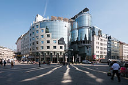
FIFA World Cup, obviously, was a highlight, just came in very late, and we mentioned at the last call that we signed just a couple of days prior to the event started. But finally, I can report, I think it was one of the most successful performances we could have. We'll come back in a minute to this. Restaurants, Lounges & Hotels, nothing special, nothing new, all in line, refurbishment of the DO & CO headquarters, so to say, flagship in Stephansplatz in Vienna has started and is going on within the schedule.
Reopening is planned for October 2026. The 3 main pillars, again, we always want to raise this innovation, innovation, innovation, quality and people are the main ingredients why this setup works better than our competitors setup. And it's all about innovation and guest experience, which I have mentioned already.
So what we are doing mostly is thinking about how can we make the guest journey with -- add values for our clients regardless of Federations or F1 or an airline and then give the add value to the final end consumer, which then comes back in brand awareness and step by step, I think people realize who we are, where it's going to come from.
And I will come back in a minute, obviously, to the PR, which we have received the last 48 hours, which was incredible. But maybe in 2 minutes, I will touch to this. Sustainable quality is one other pillar, which is key, buying the best ingredients, buying as much as possible, local sourcing, local is something which we get more and more in our DNA and then do something which really makes sense and people and clients everywhere appreciate this kind of approach.
Finally, whatever you do right, it's end of the day, people business. So our unique company culture is the key driver why we are today in Salzburg, why this happens in many other locations at the same time. So this is the reason why we have to be very grateful and thankful to our team, which is I think, really incredible in their performance, have fun and know how to do it in a perfect way towards the clients.
Creating the most memorable hospitality moments is exactly the combination of this personalized service with the right environment, the right decoration, the right product in terms of cuisine and taste, which we bring from all over the world, but combine then with a local touch. So this is a simple recipe, which we are very happy, not everyone can just replicate.
So I think we have an advantage, which is not easy to catch because we are living this kind of culture already for many decades, which you cannot turn the other way around shortly regardless what money you put in. Coming quickly to the 3 divisions, Airlines, EUR 483 million, plus 4% and plus 10% on constant currency. EUR 57.4 million means 5% increase and EUR 39.9 million means another 4% increase despite the fact that we got a hit from -- obviously from the Middle Eastern carriers due to the crisis in the region, still a plus there.
The reasons are that on one hand, we got more clients in various locations. And the other one is that load factors on other airlines has improved in a good way. So one of the key players in this game in Turkey is obviously Turkish Airlines, very long-term and hopefully another long-term partner for the future.
Best hospitality and living this hospitality on board of this airline with, I think, in the meantime, with 560 aircrafts and buying another couple of hundred is for us an incredible relationship. We -- the whole team is heavily motivated every day to deliver something which makes a big difference. So innovation is here a big, big deal, as I always mentioned, and the number of flights you see on the slide and the number of meals of 300,000 and on peak days even 350,000.
I guess there is no other kitchen in the world producing fresh meals in these volumes all in-house. So it's not bought in. It's really produced in-house. The third-party clientele gets more and more important in Turkey. So whoever is going to fly in, I would say, 90% plus is joining us, either they are our global clients or even if it's local airlines or regional airlines, they prefer to go to the market leader with this reputation.
So that's the reason why we are very confident in terms of our new gourmet kitchen where the opening should be Q1 '28, which is completely on track, and you see an incredible big construction site, which is progressing within the schedule. British Airways, IAG Group and Iberia, another strong partnership with the 2 airlines, very reliable operations so far, knock on wood on both hubs, London-Heathrow and Madrid-Barajas. I mean, these are big hubs where we operate a couple of hundred flights a day, everywhere our fresh menus.
Iberia just opened a new lounge in Madrid, the Emerald Lounge, which happened last week. The official opening will be in September. So everyone is getting more and more proud of special experiences, which bring them, obviously, in the premium clientele, loyalty and simply more business [indiscernible]. United States, on the next page, as you know, for a long time, we had almost no U.S. carrier as we always thought it's the peanut kind of lets say, setup where we are maybe not the right partners.
Now after Delta and especially JetBlue and JetBlue is very much focusing with the Mint class on a super experience in the business class. Now we could get American Airlines -- so in London-Heathrow, when you say 22 flights, we are talking on 22 long-haul flights. So this is a good number, a significant number. And I think we have great opportunities to grow our business with American Airlines if once hopefully, we can get good NPS scores and good feedback from the passengers and from the crew.
New contracts around the world. So you see listed all the Air Canada, Air India, I mentioned already Emirates and so on. Maybe more important is the truck on the picture. So our truck is -- I think it became now the most famous truck in the world. So the last 48 hours, there was not one single broadcast station, social media, newspaper, New York Times, you name it, where we were not on the front page.
This is an incredible opportunity for us in terms of brand awareness, which I think, obviously, we have no comments as this is a discrete business. So we do not -- we just released yesterday a press release that end of the day is no comment. So what would you say? And it's not our job to comment this. But I think as a way, how it's through all the media around the world, it's really a way you can -- you simply cannot buy in.
So International Event Catering, next one, EUR 111 million in terms of revenue means 11%. EUR 14.1 million, this increase of 17% in EBITDA and EBIT of EUR 11.8 million is an increase of 20%. Although we did not have 2 races in Saudi Arabia and Bahrain, we could cover this or we can -- we could replace with good revenues in other areas and especially obviously, in the FIFA World Cup 2026 where we could get this kind of minus on one hand and turn it to a plus.
You see on the next page, our 3 locations. So it was Mexico City, including the opening game, Miami and New York. We believe these 3 stadia were the most important or at least one of the most important, so to say, as the opening, the final and Miami was a super destination for a certain crowd. So we did 20 matches and more than 75,000 guests in these 38 days.
And it was a very successful operation. You do not hear something from me wording like this was almost perfect. So I think what we could achieve was that the comparison between other locations and us was for us the driver that everyone asked who are these guys doing this because people that they get in other locations and in Mexico or in Miami and New York, and we had a one-to-one comparison throughout the tournament, which everyone realized, the media realized, all the professional guys realized, FIFA obviously realized.
So the feedback was excellent, and we got, I don't know, how many business cards and requests now. I think this is an incredible driver on the American market, combining now with our prominent, let's say, high loader and picture of the container truck, so to say, it's a good fit in terms of brand awareness on the market. Formula 1, next page, exciting season start. All the races in Miami, Canada, Monaco, Spain and in Spielberg, Austria were super sold out.
Very good feedback. Formula 1 is going through the roof. Hopefully, it continues like this. There's very strong demand and except the 2 races, which were canceled, we see -- we are sold out everywhere. So the race of Bahrain was just a couple of days ago transferred, so to say, to Malaysia. So the one race which we lost in this quarter will come back somehow on, I think, in October 2 to 4 or something like this. It's already in the calendar.
Maybe it will not be as packed as Bahrain was because it's on short notice, but we'll get some revenues back, which we lost in this quarter. Customer feedback, great state-of-the-art hospitality. I think F1 is really #1 worldwide in hospitality, which at least everyone says, and this is the feedback we get from the clients. By the way, in terms of client feedback, 97% say they like it and they would come back.
So this is an incredible number. Allianz Arena, Bayern Munich, long-term partnership, Bundesliga, Champions League matches and other events, Olympic Park and SAP Garden, you know already what's going on. In Tennis, we had a super ATP in Madrid with the winner Jannik Sinner and the other part of the Champions League final to mention with, I think, 8,500 guests or even a little bit more in Budapest was a great success.
So everywhere where we have been was luckily a good feedback. And again, super teamwork in all the areas. Restaurants, Lounges & Hotels, EUR 47 million, plus 7%; EBITDA, EUR 6.7 million which means 4% and plus 8% in EBIT, EUR 4.8 million. Nothing special to report. Demel is doing well, as always, with the Kaiserschmarrn, Vienna, the flagship store is under renovation for the next 2 months. So we might lose a little bit here in revenue.
But at the end of the day, I think when we open, we can face another level of hopefully, yields, especially in hotel. We are getting a few more suites in as the demand on suites is very, very high. What else? I think for the restaurants, nothing more, airport gastronomy is doing well and all the lounges obviously doing well, too. For next year, I think we mentioned already, we're going to open another big lounge in Istanbul, which will be in operation, I think, in end of Q1 or Q2 next year 2027. And the rest is fine.
Thank you very much for listening. I hand over to Johannes and then happy for your Q&A. Thank you very much.
Thank you. Good morning and good afternoon, everyone, and thank you for joining us today. Let me now take you through the financial performance in more detail on Slide 31. Starting with the revenue, we grew by 5% on a reported basis and by 10.2% at constant currency. And here, it's important to put these numbers into context.
The Middle East conflict had an estimated revenue impact of around EUR 40 million in that quarter. Excluding this impact, reported revenue growth would have been approximately 11% and growth at constant currency, approximately 16%. Despite this significant headwind, we improved margins all the way down the P&L.
Attila already mentioned the EBIT margin of 8.8% versus 8.6% last year and the increase in net result margin from 4.4% to 4.9%. The tax rate was higher than last year, while minorities came in slightly lower, but overall, the net result is in line with our expectations. Let's now take a closer look at Q1 on the next page and how it compares to the previous quarters. Looking at the margins, EBITDA remained at a strong level of the previous quarters.
EBIT margin was close to our strongest quarter. And most importantly, the net result margin reached 4.9%, matching the strong level of Q3 last year. The margin development in particular, shows the resilience of our business model even in a challenging external environment. FX, you can see it on the bottom, had a relatively limited impact in Q1 with a gap of around 5 percentage points between reported and constant currency growth.
Turning to the divisions on the next slide. Let me start with Airline Catering. At constant currency, revenue grew by 10%. Excluding the Middle East impact, growth would have been 15.2%. The division was impacted by an estimated net revenue loss of approximately EUR 25 million. Despite this, we were able to slightly improve the EBIT margin from 8.2% to 8.3%.
International Events Catering also performed very well, delivering a double-digit revenue growth despite the cancellation of 2 Formula 1 Grand Prix in the Middle East. The FIFA World Cup also contributed positively to the strong development in that quarter. EBIT margin improved significantly from 9.8% to 10.6% Restaurants, Lounges & Hotels also continued its positive development, delivering double-digit growth at constant currency while further improving the EBIT margin from 10% to 10.2%.
What is important for me here is that all 3 divisions further improved their margins in Q1 '26-'27. Moving on to the balance sheet on Slide 34. There are 2 points I would like to highlight. First, trade receivables increased by approximately EUR 59.9 million. That's mainly reflecting the higher level of business activity during the quarter. And second, cash and cash equivalents increased further to EUR 269.1 million.
On the other side of the balance sheet on Page 35, our equity ratio increased further to 42.9%, supported by higher retained earnings and noncontrolling interest. Trade payables increased by EUR 43.3 million, partly related to the FIFA World Cup and our bank debt is now at a very low level with only EUR 10.1 million of scheduled repayments remaining for the current business year.
Turning to the next Page 36, the cash flow statement. We also saw a very positive development here in the first quarter. Cash inflow from operating activities increased by EUR 18.1 million compared with last year, supported by our higher gross cash flow and a lower working capital outflow. Free cash flow more than doubled to EUR 46.9 million compared to EUR 23 million last year.
CapEx was EUR 16.5 million in that quarter, slightly below our expectations, but we expect investment activity to pick up over the coming quarters and remain fully on track with our full year guidance. As a result of the strong earnings and cash generation, our cash position is now EUR 98.3 million higher than at the same point last year.
Finally, let me spend a moment on our leverage position because I think the development here is worth highlighting. Based on rolling 4 quarter EBITDA, DO & CO has now moved into a net cash position with net-debt-to-EBITDA at negative 0.07x. Just to put this into perspective, this ratio stood at 3.3x in '21/'22.
So we now have a very strong financial position, giving us significant flexibility to invest in future growth while maintaining a conservative balance sheet. So overall, we are very pleased with the start to the new financial year '26/'27.
Despite an estimated revenue impact from the Middle East conflict, the underlying growth momentum of our business remains very strong. At the same time, all 3 divisions improved their margins. I think that's demonstrating the resilience of our operating model. And finally, strong cash generation has further strengthened our balance sheet and moved DO & CO into a net cash position.
So thank you very much for your attention. We are now happy to take all the questions. Thank you.
[Operator Instructions] And the first question comes from Patrick Steiner from ODDO BHF.
2. Question Answer
Can you hear me? Okay, perfect. I've got a few. I will take them one by one, if that's okay for you. I'll start with the first one, which is with regards to the new kitchen in Istanbul. Can you maybe give us a bit more information about where will you be in terms of capacity utilization expected after the ramp-up? What is your expectations in incremental margin effect? Will this improve profitability at the joint venture and so on. This would be the first one.
Okay. Let me start to give you the -- hopefully the right answer. So as you know, that we have in Turkey, a cost-plus model on a defined margin. So the capacity now is throughout many locations as we do not have one main kitchen and it is very complicated. So we are having an average between 250,000 and 300,000 meals today, and the new kitchen will go up to 500,000.
So 500,000 means in terms of revenue, always obviously depends on if Turkish Airline grows like they have scheduled and at the same time, if the others are growing as well. So in terms of capacity, I think then for the next, I would say, 8 to 10 years, we are incredibly safe. And not only this, additionally, if there was even more business, which then means that Turkish Airlines must have kind of 1,000 aircrafts.
So this is a big deal. And then even then you could do -- you could separate partially warehouse areas in the building, which is easy to replicate somewhere else and increase the production. So the whole thing is built that you can size down and up depending on market conditions. So we are used after so many years in this business that you count both directions.
So if there is a crisis, you immediately can reduce the capacity. And if there is good opportunities, then you can go ahead. Additionally, I think I have to mention we're working very strong on automization and robots and these kind of things. As you might know, almost 50% of the cost, so to say, is not visible for a passenger.
And whatever we can gain in reduction on the logistics side, we can invest on the product. This is something which we do very proactively for the future. So I think in terms of percentage margin improvement, yes, a little bit, but you're not going to double it. In terms of revenue increase, I think you can expect then significant revenue increases if the market is in a good shape. I hope this helps.
Yes. That's very helpful indeed. The second one would be following up on costs, as you've just mentioned. I mean, after this enormous post-COVID growth phase that you have been in over the last few years, what is planned for the coming quarters in terms of efficiency measures? How will this affect the cost base in the current and next year? And where is the biggest cost savings potential, so to say?
Johannes, let me start and maybe Johannes continue. All the improvements in margins don't come because we just charge simply more to everyone. So it doesn't work. So there is a market, there's a market price. And yes, you can get some premium on the pricing, which we do. And to keep the premium and maybe slightly to increase the premium, then you have to invest in education in better skilled people, which means you pay them well.
And at the same time, you train them to get this level to be consistent throughout the network wherever you go to. So this is the one side on the top line, so to say. And on the other side, we have to manage a constant improvement program within our costs everywhere from procurement to the robotic issue, which I have mentioned.
And both together are having the goal going to the next level, which is heading now the 9% EBIT and then going hopefully as quick as possible to the double-digit, 10%. So 10% to 15% wherever, depending on the business and on the split of the business is a target which we have on a super long-run sustainable model, which we believe you can do.
We do not think you can do 28%, but can we do something between double-digit 10% and something 15%, 100%. This is what we believe. Johannes, I don't know if you want to add something to this?
Yes, maybe one sentence. So also the margin improvement now in the last 3 years, I think that's a result of different measures. So of course, strong operational controlling, disciplined pricing, efficiency improvements, as Attila mentioned, strict cost management. But I think for now, the next step for sure is optimization.
And if you look to our personnel costs, for example, in the P&L, you can see a shift between personnel costs and COGS. That's also due to the fact that we hire more permanent people, which also helps us to get a higher efficiency and more importantly, also reduces our overall cost base.
That's very insightful. And also answers the question thereafter. Maybe a last one from my side. I'd be very curious about how this quarter's award wins, especially with Emirates in Boston, which is a location which has a fewer number of customers, for example, compared to London-Heathrow is affecting what kind of impact does it have on logistics, procurement efficiency, margins? And how does it affect the setup there?
Johannes?
Yes, let me start. So that we don't want to disclose revenues for individual customers, but just a total number for you. So just to give you a sense of the business there, the customers mentioned in our press release have an annual revenue of approximately EUR 80 million.
Part of the revenue we already have because we already produce some premium products, but it's a total revenue of EUR 80 million. And for sure, that also is one measure to improve our margin in certain locations because we get more contribution out of that. In terms of procurement and other overheads, we do not expect, to be honest, to higher spend here because we have a setup in London, we have a setup in those stations.
Maybe we need some CapEx, but also not a big number like, for example, buying trucks for certain operations or maybe getting another warehouse for location, but we are not expecting now double-digit million CapEx for those customers.
And the next question comes from Simon Keller from NuWays.
Starting off with the FIFA World Cup and the inquiries that you now have as new opportunities seem to emerge in the U.S. for you. I was wondering, can you share any color on how these new opportunities look like? Do you think this is more a sports stadium business similar to the Allianz contract or is it more single event based?
And also what lead times should we -- do you expect in this business over the next years as it evolves basically in the U.S.? Secondly, on the American Airline contract from London-Heathrow, I remember that you temporarily served them from London already. So I was wondering how big the step-up is, ideally, of course, in revenues, but I guess, on a per flight or flight per day basis, that would also be helpful.
And my last question is on the financial flexibility that you have gained. And I was wondering whether you could once again outline your capital allocation considerations, in particular, whether you plan to maintain this net cash position or whether you're considering any other opportunities like buybacks, dividends, M&A and so on?
So thank you very much. Maybe let me answer the first part. The FIFA World Cup, I mean, as we have already mentioned and discussed together, our business, you cannot advertise. So the only way to get the next business and if you want to get the next business, then you have to create demand.
Otherwise, you're under pressure on the margin. So the good news here is that in -- on the U.S. market so far, we are known for airline catering. We are known for the 3 races in Formula 1. And first time now, we got the opportunity to show the market, the public, the VIPs and the professional operators of stadia that you can do something in a stadium which is an incredible impact.
And the money they pay already in the stadia for, I would say, average product is not so far away from them what we got. So the price level in the U.S. is so high. And for this kind of, let's say, price which you get, the product was in comparison, let's say, frankly reasonable. So I'm not saying bad, but it was reasonable. So what we expect is it's not going to happen from one day to the other.
But definitely, as we did 3 locations, okay, one was Mexico, but a lot of Americans were there. But especially Miami and New York was a showcase for DO & CO, for the logo for the experience. And we believe in the next 2, 3 years, we'll get follow-up business could be operating in stadium, could be anything related for big events for corporates.
So we have been asked by so many people where you come from, what can you do, where can you do. So we believe there is in all these segments, super opportunities. The stadium business, if someone understands that this kind of operation brings incredible returns for them will start, if you ask me in the next 2 to 3 years, max. So someone will come 100%.
We have already initial talks, but it's not going to -- they have all existing contracts. And whenever they expire, I think they see now that there's another opportunity than the obvious players on the market, which are more on the commodity side than us on the guest experience side. Johannes, maybe you go with the American and the financial flexibility.
Yes, of course. Thank you. So regarding American in London at the moment, it's approximately 30% of the annual revenue that we won in the tender process that we are already doing now. So yes, of course, it's a big step-up, but 30% of the annual revenue is already within our P&L now. And regarding cash allocation and financial flexibility, you know that our first priority is always to continue investing into the business.
But whenever we see good opportunities to grow and to generate a good return, we are also prepared to invest more. So that's why our CapEx guidance for this year remains at approximately EUR 90 million to EUR 95 million, although maybe in the first quarter, we only spent EUR 16.5 million but at the same time, of course, our strong cash generation and balance sheet gives us flexibility.
I think M&A opportunities, potentially share buyback could be an option in the future. But at the moment, to be honest, we are really focusing on investing into the business.
Maybe let me add one sentence to this. Any penny, any cent we invest will rather increase the revenues or increase the margin, ideally both of them. So this is definitely the target. So it's not like go for the revenues and dilute the margin, no way for that. So I think we always mentioned this that the target is, as we said, always a double-digit EBIT margin on the long run.
And we believe this is super achievable if we do our homework and do the right investments. So it's very clear that this company is going to go for future growth, and we're not going to stop and become lazy because we have enough money to live. So definitely not going to happen.
And the next question comes from Vladimira Urbankova from Erste Group.
Congratulations to excellent results. And I would have a couple of questions, both related to the results as well as the outlook. So on the results as such, I would very much appreciate to get the overall picture of the Middle East conflict impact. You said some EUR 25 million impact on the Airline Catering side.
And how much was it in the Event Catering? That would be the first question. Outlook related to that, how does it -- how does the situation look like now? And what -- compared to the previous situation? And how do you judge you will be impacted this fiscal year? Next one would be in the event catering the impact of the FIFA World Cup.
How much was recorded in first quarter? How much we still can expect as a top line contribution in the second quarter? And then last but not least, if you could give us a brief summary of your guidance, if you stick to it, what do you expect as revenue growth as reported and revenue growth in constant currency terms maybe? And also the margins after such an excellent first quarter, what is your EBIT margin guidance now?
Yes. Let me start. The first one is the results and the Middle Eastern impact. So the total impact of the Middle East conflict in Q1 was EUR 40 million top line, thereof EUR 25 million approximately in Airline Catering and EUR 15 million approximately in Event Catering. So if we talk about at constant currency, I mentioned that in my presentation, constant currency at constant currency, the revenue grew by 10% in Airline Catering.
Without the Middle Eastern impact, it would have been 15%. And in Event Catering, of course, the loss of the Formula 1 races was overcompensated by the FIFA World Cup. I think that is the third question regarding the FIFA World Cup. Approximately 70% of our revenue is in Q1 and 30% in Q2 because we had 20 matches in total, 15 in Q1 and 5 in Q2.
Then regarding the outlook, you know that we mentioned a number in our last call in March, we saw a net impact of the Middle Eastern conflict of EUR 16 million in 1 month in Airline Catering. Now it was EUR 25 million in the first quarter. June was a very low number. And in July, to be honest, we are always already back on track and on our budget level.
So we do not see any impact of the Middle East conflict right now because also on the other side, we see higher load factors in some other routes. So from July onwards now, August, we see no further impact. I hope that the situation stays, but at the moment, it looks good. And that brings me to your last question to the guidance.
So our guidance remains the same on top line, it's between 6% and 8%, of course, dependent on FX and the Middle Eastern situation. And at constant currency growth rate, we expect between 11% and 14%. So it's a difference of around 5 percentage points what we have seen now also in Q1. And regarding margin, also our guidance remains the same between 8.6% and 9% on the EBIT margin. I hope that helps.
Yes, that helps. May I ask you also for the absolute terms, the FIFA World Cup impact on the first quarter results. How many millions was it?
It's around EUR 28 million -- EUR 28 million, EUR 29 million.
EUR 28 million, EUR 29 million.
Then the next question comes from Marie-Therese Grubner from Cantor.
Can you hear me? I have 2 left given that many were answered. First of all, Mr. Dogudan, you mentioned that sports is where you will grow most. Obviously, we touched upon the U.S. market. Is Europe for sports also something that we should have on the map? That's the first question.
Definitely, you should have it on the map. The reason why I highlighted U.S. is that in U.S., no one realized, knew that you can get something in a U.S. stadium, which we could deliver within the circumstances during the FIFA World Cup. And I think in Europe, clubs know that we can deliver and that we can make the difference. So it's always about the pricing.
So if it would be -- if we would accept to go for a lower level, we would get a lot of stadia, to be honest. But it doesn't make sense as you dilute the brand, the margin and everything. And we believe you can only do in every country, one major, so to say, depending where you go to. So Europe is 100% on the map and will be most likely quicker than the other one.
Okay, great. My next one is regarding the Airline Catering business. Obviously, you have Delta, JetBlue, you're growing into American Airlines. From a broader picture perspective, all these airlines are competitors and not only the U.S. ones, but also the Turkish versus the Emirates, et cetera.
Given how in demand you are, do you think that you would get to a point where an airline is going to slap inverted hype and slap a noncompete clause on your business? Do you see this as a danger that you cannot offer the business to their competitors?
Yes. I think if you look to the portfolio, you're a 100% right. But it's like a good doctor you go to, right? So as long as no one else can deliver tailor-made solutions and what we are trying to do and the reason why we want to invest in education, in people in different hubs in different areas, getting the right people to be more authentic in the product and the taste and these kind of things is that a product which you -- I don't know, which you fly for Cathay Pacific, where you have a lot of additional to the Western world, a lot of the Chinese world is obviously not always the right product, which maybe would go on British Airways or Turkish and so on.
So what we're trying to do is to is like a fashion designer. So you think about how can I segment that not everyone flies with the same curry. And this is -- in theory, you are right. If a client gets a certain size, especially in U.S., they might say, okay, I don't want my competitor to have the same product.
But the exchange would be, okay, then you have to give me another EUR 300 million of revenues, right, if we would come to such a point. We try to stay independent. We believe there is enough room for the future. But you are right, one day, someone might say, you cannot do it like my competitor on the other side. The lucky part so far for us is that the product we deliver most likely others cannot deliver.
And I think this is always the driver. This is the reason why we have to invest in people, innovation, locations and these kind of things. So if you -- end of the day, in the premium, the only thing what works is demand -- so in desire, not demand, desire. Desire means I cannot get everywhere what I wanted. I think one of the reasons why the luxury business is losing because everyone has already 3 handbags.
So this money goes now to entertainment. It goes to hospitality. People rather go to Wimbledon or to Formula 1 or to FIFA World Cup and pay enormous prices for a ticket. I mean, a group game was in Mexico $7,500, one game. So if you compare this and if you look how much these premium events charge more and more, and the demand is incredible because social media drives that you want to be somewhere where others cannot go.
And to be honest, in airlines, especially in the premium cabin, if you create something what others cannot do, then I think you have a unique selling proposition. So we are aware of this problem, honestly, and we don't accept any limitation because a limitation would only be acceptable if you give me so much revenue that I don't need in this region anyone else.
And then you have to cover my risk, give me a 15 years, 20 years contract, right? So that I think it's not beneficial for both parties. And it's always competition. If someone comes and does as good as we do or better, then we have to become better again to win the game.
Okay, perfect. I think my 2 residual questions are for Johannes. Nitty-gritty financial questions. The first one, Johannes is the financial income, I mean, this is something that was an important swing factors for your over-proportional net income growth. And it was quite high.
And I was wondering if this is a figure which is sustainable for the remaining quarters because it implies like a 20% return on your cash balance, if I'm not mistaken, which is very high. And I was wondering how we should be modeling this? That's the first question.
And the second question is also what you mentioned, i.e., the number of temps declining and the permanent employees increasing. Where is this ratio now -- temps versus permanent compared to, let's say, 2 years ago? I'd be interested to know.
So the first one regarding the financial results. So I think you can expect the financial results in Q2 and Q3 anywhere between 0 and maybe minus EUR 5 million. And then in Q4, we expect minus EUR 5 million to minus EUR 10 million because in Q4, the hyperinflation effect within the financial result is always the highest.
So you can expect those numbers within the financial results. Tax ratio, we expect anywhere between 28% and 29% for the full year. And regarding the number of temps, I think that we have to find out the number in detail, to be honest. But for sure, I would say most of the units we improved the ratio by 5% to 10%, at least minimum, which is part of our margin development.
But a short -- small number of temps we normally use also to balance maybe some revenue losses or revenue reductions. So I think a 0 number here doesn't make sense. But for sure, this is one very important topic, which also helped us to improve the margin because we are more efficient.
We get the same people every day. And of course, that makes sense. The kitchen, to be honest, the number was always very -- the number [indiscernible] was always very low. So in the kitchen, especially, we normally only use [indiscernible].
And the next question comes from Christoph Greulich from Berenberg.
It's 3 from my side, please. And I would like to take them one by one, if that is okay. Yes, I would like to firstly follow up again on the Middle East impact. I appreciate the clarity and the color you've provided on the top line impact.
Would you be able to also give us an idea of the margin impact where the EBIT margin, especially in the Airline Catering division would have landed without that impact from the Middle East situation. And then I was also wondering if you have implemented any special initiatives to mitigate the margin headwind.
Thank you, Christoph for the questions. So on the EBIT margin in Airline Catering, if it is EUR 25 million revenue reduction, if you assume a contribution of EUR 4 million to EUR 5 million approximately, I think you could have expected the EBIT margin in Airline Catering instead of 8.3% to, I would say, close to 9%, maybe 8.7%, 8.8%, something like that.
Of course, we -- there was no special measure we took in Q1. I think it's a combination of those things that I already mentioned, operational controlling, we are tracking our revenues every single day. We are reducing personnel cost, hours if necessary every day.
So I think we improved that process. And yes, we are happy that we were able to increase our margin despite we had that effect. But I think that the EBIT margin in Airline Catering without that would have been at approximately 8.7%, 8.8% in the first quarter.
Great. And then on the situation in London, the Heathrow location. So with the, let's say, meaningful new contracts there with the American Airlines and with Air India. What's the headroom to add further business at that location? Could you give us an idea of the current utilization or if there's any capacity bottleneck there?
I would say maybe let me start. We are now with 22 long-haul flights. This is a big chunk. And don't forget, we have Air India with 9 flights [ a day too ]. So -- and this is, again, long haul. So this is all business which we can do because we have still the old building next door, where we have some separated areas with, I don't know, dishwash and warehouse and these kind of things.
So if further business is going to come in the next round, and we have to get partially warehouse out and do production or the other way around. I mean this is exactly why we keep the money for investments as we believe that these kind of hubs like New York, like London, like Los Angeles and so on, the ones where you have high frequency.
There, we see the biggest demand and everyone wants to do on this prime route, so to say, a good product. So if we -- let's digest now for the next couple of weeks and see where we are. What happens is really interesting. You think it's already packed and then you get another 25 long-haul flights and somehow you reorganize and it works. So this is where we are. But you are right, we are at maybe another 10%, 15% maximum in the current location, but no more, definitely no more.
And then lastly, I wanted to ask about your expansion plans. A few quarters ago, you announced the plan to open a number of additional gourmet kitchens. And I was just wondering if you could give us your updated thoughts about the time line for those new openings and if the Middle East situation has led to any changes in the time line there?
Yes. The one was on the U.S. market, which we will -- which we definitely will do in the next 12 months. So we are there to enhance these locations and increase the local setup, so to say. The other one was on the Middle East, which was obviously now parking. But the desire to get to these 6, 7 new locations in total is basically a demand of the market.
So it's not like we're going to open somewhere something. Airlines ask, can I get here and there again something? And if we have enough start-up clientele, so to say, then we go there. We have, I think, already mentioned that we're working on a system, which I think we are now very soon to deploy to bring in hot kitchens in a very smart way where you do not need 6 or 9 or 12 months of construction anymore.
So you go in a modular system like we use it in Formula 1 and kind of fix and play, so to say. And then we can do it. We just wanted to get the right infrastructure to be able and then we go ahead. So the plan is not on hold.
[Operator Instructions] So it looks there are no further questions at this time. So I would now like to turn the conference back over to Attila Dogudan for any closing remarks.
Thank you very much. So thank you very much, ladies and gentlemen, for joining this Q1 call, and thank you for all the questions. I hope -- we hope that we could give you the right answers. So we believe that the next quarter or half year will be in line.
So we don't see any bad wipes anywhere and especially as we have discussed a few times in the Middle East, as Johannes said, we are on a point that the business seems to be back despite the fact is if there is a point-to-point, maybe less, but -- and transfer is more.
But what we see is that our passenger numbers, which we have to deliver with the good experiences, hopefully, are almost there where it was before. So whatever comes now is better than hopefully what it was before in terms of this region.
And yes, the rest is fine. So is there always a guarantee forever? No. But currently, the current quarter and all data, all forecasts, all pre-bookings look like this will be hopefully a good year. So thank you very much for listening. I hope to see and hear you soon, and have a good day to all over the world. Thank you very much.
Thank you.
Ladies and gentlemen, the conference is now over. Thank you for choosing Chorus Call, and thank you for participating in the conference. You may now disconnect your lines. Goodbye.
Transkripte auf Deutsch freischalten
- Alle Event Transkripte auf Deutsch
- Sofortige Übersetzung
- KI-Zusammenfassungen für die wichtigsten Insights
Do & Co — Q4 2026 Earnings Call
1. Management Discussion
Ladies and gentlemen. Welcome to the results for the business year 2025, 2026. I'm [indiscernible] operator. [Operator Instructions] and the conference is being recorded. [Operator Instructions] Attila Dogudan, CEO. Please go ahead, sir.
Thank you very much. Ladies and gentlemen, good afternoon to Europe, Turkey and Middle East, and good morning to the. This is Attila Dogudan I'm together with Jones in Mexico. After the for joining Formula 1 in Roselona and the other are Chinese Indiana. So obviously, we are very happy to present our business year results of 2025 and 2026. .
Last business year was the best ever in company history before we go quickly through the presentation, I want to say on a macro level that we have achieved all targets we wanted not only financially even more importantly, the right strategy, where DO & CO going to.
I have to say, this was a super achievement of the DO & CO great teamwork. So we have to say a big venture to every single employee in this company. And it makes us proud that we are well prepared to the next round of growth, but smart growth, which does not low on revenue only, like we have proven out in the last couple of years, which goes on quality growth with further margin improvements in the future.
DO & CO more and more is positioned as a premium brand on the 1 tenant or go from your championing, just 10 this 2 weeks ago in Budapest, which was very successful and up to where we are today in Mexico, where we are part of the biggest or demand in the world posting only today almost 8,000 VPs. We just opened the doors at [indiscernible] here remember that you have asked us many times what is the outcome of the tender of the people work cut and we couldn't give you the answer.
As we have on our own answer, we did not get an answer. But finally, and this is sometimes the specific of this business. FIFA then who had basically sold the rights of the commercial programs or somewhere else with ownership and awarded us for the most important 3 locations, which is Mexico with the opening game and Miami and New York with the final and the same, I think, same time on qualified majority is taking place in this area.
And believe or not, we have only signed this agreement last -- end of last week. So we are used to this. Maybe you are not so much. So we are so at the end of the day to the year, and we're happy that we are a global premium and reliable partner when it always comes to big cortile -- now maybe let's go quickly through the presentation.
Obviously, I guess you read already the revenues of $2.461 billion, an increase of 7%, the highest ever we had on constant currencies, it would be even an 18% growth. EBITDA, the EUR 300 million was really products with an increase of 15%, maybe 12.3 million, 16% increase in net results of EUR 15.8 million, which is an increase of 14%. But even more important, we believe, is the development of the margin to 12.2% in EBITDA so 8.6% as we always promised 8.5% net results, 4.3 million.
So bottom line, I think the team did a great job. And although there were a lot of a Middle East and these kinds of things, but then we're going to come back in a minute to this. The 3 divisions you see already a given 1.9 and 323 million and versus 18 million so you see all divisions have increased not only revenues, but more important, as we always focus on with the margin. First time the 2.4%, obviously, the free cash flow of EUR 225.1 million is an increase of 80% in comparison to last year not maybe everyone is happy with that. We are super happy with our net debt-to-EBITDA ratio 0.05, which gives us the opportunity of really that ceilings during announce Corona that we are strong enough on the market with an equity ratio of 42.7 to go to the next step as we mentioned -- as I mentioned earlier, with the growth strategy on -- based on product.
In airline catering, we won more tenders we see it in the presentation then, we have a board letter from American Airlines in Chicago. Starting next year, the contract is not signed up we have been awarded with that. We've got years where you see in [indiscernible] which is a lot of flat too.
So if you look to the portfolio, you see a lot of clients who are all over the world. and all of them obviously, like what we do, and we are very part this portfolio. In rent catering, Mexico, yes, this is emotional for us very important. As we did the [indiscernible] last minute in Qatar and now has been awarded for the 3 most important cities and the restaurant balances with margin improvement and is basically the basis of the success of the other 2 divisions.
So innovation, quality and people are the drivers. When we come back to airline catering EUR 1.9 million and the EUR 230 million and the EUR 159 million in terms of EBITDA yield, strong numbers. We believe that what we do here really makes sense. The focus of quality on one hand and on the other side, anything which is commodity being as efficient as possible is a good mix for all the airlines who basically, at least in our portfolio, trying to increase quality.
We see this almost everywhere of the network carriers. And we are not winning destination, I would say, for pure low costers but for any one with flight network and has a more complicated and complex product don't go direct partner. Turkey, always over the price of of the company yet. Why? Because Turkey and Turkish Airlines is almost focusing in every detail to deliver best hospitality, which is in the DNA of Turkish. So this really makes sense.
We are working on ongoing product innovations with strong volume increase in the number of aircraft, which have been already ordered to the and will almost double in the next tenders assembled to the strategic locations of relocation. We have a strong market position with third-party clients as well. So like over 90%, I been almost 95% of the market is covered by us.
And as you see at the picture on the left and below the back cranes and the construction has started with the biggest kitchen in Europe, I guess, is in the world this is participated one on this plan. IG growth with eos in Iberia, close partnership with [indiscernible] Why? Because we deliver what they expect on the NPS scores have gone up fresh menus and this is always the trigger is a driver of customer satisfaction, which an end of the day, product having no additional preservatives with all the hiccups in the radio production.
Obviously, we are not doing anything wrong every day. But overall, we see the great customer feedback, which is the driver then for the next contract. Iberia is the same ordering and gas experiencing more and more clients winning various competition awards, which makes us happen. New carrier in the U.S. as I said, the contract is not signed, but we have been awarded in writing.
American is the second biggest airline in the world, only behind United at 2.3 million passengers for us, a great opportunity, we should cargo from next year on to show that we can hopefully give the add value to American makes us very proud, and it's a good news I think, for the American market.
JetBlue, further strategic partner. I think the one reason just yesterday today, West American [indiscernible] terms of food and beverage. So again, there is a portion of us in this work, too. The other new clients I'm not going to mention all of them that you see in the presentation and the new contracts with it from the Canada is always getting more and more case of the world.
So it makes us very proud in terms of the portfolio. Coming to the next division, the International altering $222 million of revenue only 6% increase with EBITDA 9% plus EUR 23 million or 7%. So please keep in mind that the euro did not happen this year. Total sales growth with the 15%. But as we said, we need to go on quality only, and this is showing us, and you will see in the next 2 years, the next, I would say, steps in this division.
Formula One is doing super well always are sold out. And with our maximum number, we have been last week in Monaco with a completely new [indiscernible] on TV, where you have first time really is something impressive in the visual of Monaco when Super World incredible customer feedback this weekend from tomorrow is Barcelona and then Austria and Silverstone at the same time with the World Cup here in U.S. and New Mexico.
But it's everywhere strong demand. So we are increasing more and more the quality because we see that the money goes from luxury business to this kind of event business. People want to be in this premium demand, and this is something which really posts in social media. And in this game, I think we have 1 of the most reliable partners, brand in the world, being able to deliver the negotiation.
As you see in Mexico, we hope we can deliver it. It's a tough book year. We weave almost 7,000 guests in this for weeks. So we'll see that we can deliver what everyone expects from us. [ Alianterena, ] same game, super long partnership with F1. We're going in a new phase with renovation in [ Aliantarena, ] which will start next year where we hopefully get a new level of hospitality experience in the world, definitely in Europe.
Environment, if it's the right partner to support this, and we are very proud to be with them for a long time. [indiscernible] concept anyway. And I think as a [indiscernible] is only not so much here, but it's a great business case because it's first in a stadium, which has doubled utilization through skewed takes almost everybody 2 or 3 events, at least in a stadium, I think 10,000 or something like visitors.
We do the VIP and the public in a close relationship with by Munich and Red Gold, both of them, great partners for a long time. Ten with the Madrid, as you know. So growth seems to. So all these other events was not in terms of figure what I already mentioned, I think enough so we'll see where we are today in the afternoon of in Europe.
So we are well prepared. We have more than 1,000 people, 1,200 people working here in total 200,000 people working in the stadium so it's not a small operation, and it's a big opportunity for us to be the benchmark to especially the margin market, how we can run a football side.
So far, our visibility was only in Formula 1 with the races in Austrian [ DataSIM ] first time in stadia and Sadiola as a net driver in New York, the [indiscernible] Luckily, the stadium where the Formula 1 happened. So we left our equipment there, which during the raise a couple of weeks ago, and we know it is the circumstances of the whole setup in the harder stadium.
Maselis, the one which is for us emotionally and number wise, very important and EUR 18 million of revenues we million EBITDA and the EBITDA is an increase of 19% and 27%, which are great numbers. So we see more and more that this business, which for so long time did not make money is better managed, and we see that the portfolio we deliver in the mix of [indiscernible] airport as one really makes sense.
The hotel in Vienna is coming out to a renovation, we're going to close down next week for 2 or 3 months. 2 months and make a full generation of the building. [indiscernible] as you know, we won in Indiana for the next terminal extension next year, a couple of locations. So bottom line, it looks good and was a good year.
So thank you very much for listening. Johannes will then take over with the numbers, and then we are happy for the Q&A. Thank you very much.
Thank you. Good morning and good afternoon also from my side, and thank you for joining us today. Before going into the details, let me briefly summarize the key financials for '25, '26. Overall, we have delivered strong underlying growth, improved profitability and a significantly stronger balance sheet. Most importantly, our earnings are translating into cash at a very high rate underscoring the quality, resilience and scalability of our business.
Let me start with the income statement on Slide 28. For the full year, '25 '26, we generated record revenue of $2.46 billion, an increase of 7.1 on a reported basis while constant currency growth reached 17.6. At the same time, profitability also improved further. EBITDA margin increased to 12.2% from 11.4%. EBIT margin expanded to 8.6%, up from 8.0% and net result margin improved to 4.3%, up from 4.0%.
This is not just growth. This is higher quality growth with expanding margins across all levels. Turning to Slide 29. I would like to draw your attention here to the fourth quarter. Revenue increased by 13.4% year-on-year and 15.3% at constant currency. The FX impact was limited in Q4 with only a small gap between reported and constant currency numbers. EBIT margin came in at 8.3%, and broadly in line with last year and net margin remained stable at 3.6% despite the challenges in the Middle East. I will come back to this impact on the next slide.
On Slide 30, looking at our divisions, you can see across all 3 segments, we delivered constant margin expansion. In Air and catering, our largest division, Organic growth reached 19.5% at constant currency, supported by new customer wins and solid demand across key markets. In the fourth quarter, constant currency growth was 13.4%. This was impacted by the Middle East conflict for around 3 weeks in March.
Cantel Flights had a negative revenue impact of approximately EUR 23 million, partially offset by around EUR 7 million from additional flights. So excluding this growth would have been close to 17% with stable margins year-on-year.
In international demand catering performance remains extremely robust. EBIT margin at 10.4% and the business grew organically by 7%, again, driven by strong sustained demand for premium hospitality at major sporting events. Restaurant Lounges & Hotels, EBIT margin increased to 10.1%, up from 8.7%. This was supported by strong demand in airport lounges, high utilization in our premium restaurant portfolio.
Let me now move to the balance sheet on Slide 31. Cash increased significantly to EUR 240.8 million. Trade receivables declined by EUR 7.5 million, driven by strong collections and PPE decreased by EUR 21.3 million, mainly from currency effects on our U.S. assets. On the liability side, our equity ratio improved from 35.8% to 42.7%, supported by higher retained earnings. In '25, '26, we continued to reduce financial liabilities. Lease liabilities came down by EUR 20 million, largely in the U.S. And during the year, we repaid EUR 55.8 million of bank loans.
To put this into perspective, since 2022, '23, we have reduced bank debt by EUR 247.9 million. This reflects strong internal cash generation, disciplined financial management and this is a structural improvement, not a one-off.
So you can see, overall, our balance sheet is now very solid and well positioned. Turning to cash flow on Slide 33. We again delivered a very strong cash performance. Operating cash flow increased by EUR 70.1 million year-on-year, driven by higher earnings and positive working capital effects. [indiscernible] already mentioned, the free cash flow, which was very strong at EUR 25.9 million, 80% up from prior year.
Please note that CapEx was a bit below our expectations 1 year ago at EUR 52.7 million. And here's the key point of alive, even after repaying EUR 55.8 million of bank loans and paying a dividend of EUR 22 million to our shareholders, our cash position still increased by EUR 66.6 million.
Finally, on our leverage position, we are now very close to a net debt-free position, I think a major milestone for the company. This is a structural improvement driven by strong earnings high cash conversion and minimal leverage.
In summary, the past year reflects the consistent the continued improvement across all key financial metrics. The positions. This positions us very well for the next phase of growth and sustainable long-term value creation. Thank you very much for your attention. I think we are now ready to go for the Q&A session. Thank you.
[Operator Instructions] And the first question comes from Julien Richer from Kepler Cheuvreux.
2. Question Answer
Congratulations for the great results. A few ones for me, please. The first one if you could please give us a little bit more granularity on how you see 2026, 2027 in terms of revenue what might be the impact of the additional signatures airlines that will be partnered during the year?
Do you have any new bases in mind new kitchens in mind for '26, '27 and what kind of impact from Middle East do you expect and the World Cup impact also. So in terms of revenue, basically some granularity on how you see the growth next year. And in terms of EBIT margin, it has been slightly down in Q4. We don't know what is going to happen with the Middle East in the coming months. But do you see margin involvement in margin evolution, sorry, in 206, 27?
Second question in terms of capital allocation. As you said, you are now almost net debt-free. What is your capital allocation strategy? You have won a contract in Mexico City, where, correct me if I'm wrong, you have no basis not kitchen there. So you have Iberia also that is pretty strong with LATAM. So is it maybe the beginning of story in Latin America and Mexico.
Do you plan to make some M&A for growing your exposure to Stadium in the U.S.? So I would be interested in your view on the capital allocation strategy. And last thing, a quick one on the impact of the Middle East.
You said EUR 23 million of negative impact for the airlines during the 3 weeks in March. Is it something that we can extrapolate for April, May and going forward until the conflict is ended. And I calculated for March, a negative EUR 4 million impact on EBIT, just wanted to check this one.
I'm sorry. But I think the speakers might be muted. We cannot hear you currently. Sorry, Julian. So now it's working again.
We charge revenue -- the revenue for 2025 -- '26, '27. So it's the current development in the Middle East continues as seen in recent weeks, we are targeting around 7% to 8% revenue growth for 2027, reported and double-digit at constant currency.
Of course, so that's what we see for '26, '27. In terms of margins, EBIT margin, our guidance for this financial year is between 8.6% and 9%. Of course, it depends on the conflict in the Middle East, but that's what we have in our forecast at the moment. Regarding the EBIT margin in Q4. Yes, you're right. EBIT margin is impacted slightly by the Middle Eastern conflict. So I mentioned the EUR 23 million in revenue reduction. But on the other side, we have EUR 7 million of positive effects. So net is EUR 16 million you can consider about EUR 2.5 billion or EUR 3 billion impact on EBIT.
So if you add this to our numbers, you will see that our EBIT margin in Q4 would have been 8.6%. And 8.7% in total year. So that's the impact, not only on top line, but also on our EBIT margin. The third question forward now to Attila regarding capital allocation and Mexico.
Maybe first of all, the WA impact, I think, is between EUR 30 million and EUR 40 million, something like this, depending on what's been really happening. So we have indication obviously how many gas we have -- so it's at least the 3 something up to 40%. So this is what we expect. Can it be more?
Yes, more people simply buy in and here in the 3 locations where we are -- regarding Mexico, you're 100% right. I mean here we have a temporary kitchen next to the stadium where we can produce. But definitely Mexico and Latin America is especially in the context with Iberian with all these things we should do in this region how should I say, a business case, which really might make sense for the future.
So we're evaluating this or have started to emanate this. That's the part on Mexico and South America impact of miles, I think Lane answered already. And please keep in mind that even the impact was not helping us in our numbers, we could manage it somehow. And sooner or later, they will come back to.
There's no way that Qatar and Emirates will not fly. I think MRs investing billions in better product on board and Qatar is the same. So end of the day, we have premium practice of them see their home base and see what happens when they are back.
So in total, what Johannes said EUR 2.6, EUR 2.7 billion for this year, I think is a reasonable estimation. And as we said in 3 years' time, we are adding the close to EUR 3 billion. I think this is absolutely reachable -- so we expect the year after something between EUR 9 million and EUR 3 billion.
So this is without any M&A. So this is the current business development, which we believe really makes sense and a reasonable internal operational tool. So if this okay? Or is there anything missing on your side?
In terms of new bases, do you have current discussions on potential large new kitchen at some airports or new airports where you could operate whether it is in the U.S. or in Europe?
Yes. We are looking at, just to be careful, but I cannot give you any more detail. I mean, obviously, if you have this kind of financial set up. And obviously, we know that not only you got will ask us what you're going to do with the money, for sure, we are thinking that the key is I don't know how much it came out, the quality growth means where can we grow, where we do not go in stupid commodity go margin business.
So this is what we do not want to do. So we want to go in partnerships. We want to do in joint ventures, we want to go in [indiscernible] on a net value, which we can create for our clients and then get a nice return on that which then in their balance sheet doesn't change their life, but in the image of an and really makes a big difference.
And at the same time, I mentioned already a few minutes earlier. The reason why we said the very last moment, yes, to do fleet we see how many tonnes you get the chance to show the American market that you can do hospitality in a different way.
So yes, for us, it's a tough cookie. Believe me, usually, we would plan the World Cup like for 2 years. We had, I don't know, 6 weeks and 4 weeks. And it was even not until the end, clear we're doing it or not. So we took the risk. And the only reason is we believe if we can deliver in Miami in the New York and in Mexico, obviously, a super product and in comparison to the competitors than the next business in U.S. canon. This is what we believe.
So our advertising is basically to make our clients happy and that's what we do. and not going for this revenue, which only we just revenue without any margin. So what Johannes said in terms of increasing the margin from 8.6% towards in is simply the next step. And then we always said the year after, obviously, we want to go having #10 under circumstances, which are okay. So it's no middle is in carrier is flying, obviously, then you suffer but to suffer on a different level than anyone else.
So I think we're still the strongest company in this industry now, and that gives us the opportunity to segment on all the premium leave the low margin commodity business to the others.
Then the next question comes from Patrick Scheiner from ABH.
2 questions from my side. Firstly, congratulations in American Airlines customer. How do you expect the business with them to scale over the next 3 to 5 years? How does award affect your group strategy in the U.S.? And secondly, the EUR 30 million to EUR 40 million revenue impact from the World Cup you mentioned is in U.S. dollar, right?
Yes, correct, Patrick. We're talking about dollar.
[indiscernible] I mean that relationship in a like Chicago is at least not long to flat today. And we have always a chance to convince your clients by doing it better than someone else. So we are everywhere in heavy competition. And I think the reason why we put in the presentation a recognized 223 million passengers is obviously showing you the opportunities and the upside.
But like tens tournament, you're not going to think in round one who is when you build against whom we were going to play in a final. I think the first step is now to do this around one with them. What we really like with American is the way how the chemistry works. So the whole relationship started in London with where we have them on some occasions, and then they like it, and then they got better NPS scores. And then -- so it's always the same story. So if you make someone happy and they rely on you and they see a partner in you, then we have opportunities. I mean someone with 10, I don't know, 200 aircraft or 1,000 aircraft is always a great partner for the future. But our first objective do this well, then I'm pretty sure it's going to be in the next 100%.
Then the next question comes from Vladimira Urbankova from Erste Group Bank.
Congratulations to your results and maybe some more details on some issues which were already touched Elias. So this American Airlines this contract, how much it brings you for now to your revenue line? And do you need to make any bigger investments in Chicago to accumulate accommodate needs of American Airlines. And with this respect also a question, how much do you think will be your CapEx in fiscal year '26, '27 then a little bit more on the Middle East. You were talking about net impact of EUR 16 million in March. Of course, this was the phase when almost all traffic was closed in the Gulf region so how does the situation develop now?
What are the currently net loss sales compared to expectations on last year in April and May. And how do you see it maybe if situation will not escalate for this year? What could be the overall impact of the Middle East on your company?
Okay. Thank you, Vladimira, for your questions. So let me start with the first one. American Airlines, the revenue, the starting point here is EUR 50 million around for one year. [indiscernible] have 17 flights but a lot of domestic flights, yes? And your second question that was regarding the space in Chicago. So we do not need additional kitchen space for that customer, but maybe logistics space. That's what we tell you all the time.
We have still a kitchen capacity in most of our kitchens. But what we need if we win a tender like that is normally a logistics space, which is also not CapEx intensive, to be honest. And yes, of course, we need also trucks. The second one on the CapEx guidance for this year is around 3.5% of our revenue.
So I would expect around EUR 90 million. Last year was a bit lower. We have a lot of projects as Attila mentioned, in our restaurants, but also with our units. So please expect EUR 90 million for '26, '27. And the third one regarding Middle East. So we see already improvement I mentioned the minus EUR 16 million net effect in March. So we saw that this number came down in April to minus EUR 14 million in May, minus 9%.
And we also expect improvement in tune. So then maybe July onwards, we expect something around EUR 5 million to EUR 7 million. So it's not a big impact in airline catering and then our last division of restaurant lounges hotels, the impact is low, to be honest, it's around 0.5 million per month at the moment, but it's getting better and better. I hope that I answered all of your questions.
Yes. Maybe can I add something no one is asking what happens for the Middle East and [indiscernible] full capacity, then you boom in the other way around. So we're just talking about what we are losing. But once there is a peaceful environment in the region, then it goes the other around because they will go aggressively on the market to get all the clients back on and attracts maybe people who do not like because they have to fill up all the planes.
And as you know, the culture of the Middle Eastern carriers is quality oriented. So they will invest to get clients and the fact people to fly. And we are very confident. That's the reason why we say sooner or later, it will come the other way around.
[Operator Instructions] And the next question comes from Miro Zuzak from JMS
I have a couple of them. Is it okay if I take them one by one.
Yes, of course.
Okay. So the first one is on airline catering. I mean now you've just given quite detailed numbers on the Middle East situation. We've also noticed the decline in organic growth in Still, full year growth in local currency was 19.5%. Now you mentioned the 7% to 8% growth in reported currency for 2027.
You said more than 10% or double digits in local currency. Now do you expect like an underlying decline in the growth of the airline catering business? Or is it just that you now expect in Q1 probably there's going to be some kind of, I don't know, EUR 15 million, EUR 20 million of impact from the Middle East, but the underlying growth is continuing or even accelerating. Can you comment on that, please?
Thank you, Miro for your questions. So please -- so maybe the first point regarding the difference between reported growth rate and constant growth rate -- for '26, '27 now we expect a difference of around 7 percentage points based on the FX forecast that we get from our banks. So the difference between those numbers should be lower than last year. as you know, in 2025, '26, the difference was more than 10 percentage points.
So that's why we're talking about 7% to 8% increase in reported currency, then constant tires should be somewhere about so close to the numbers we had now in Q3 and Q4, without the Middle Eastern effect. Because as I mentioned, without the 3 weeks in March, our constant currency growth rate would also have been at 16% to 17%, which is in line with our Q3 growth.
So we do not expect any decline except the situation in the Middle East, but I think I talked about that in detail. But yes, we do not expect any other decline, no.
Okay. And the second question is on the margin. I mean you mentioned, I think, if I understood correctly, you mentioned 8% to 9% in 2027. Now this seems to be like a broad range and even especially the lower end would basically mean that there is quite a significant decline. Could you qualify this a bit what the drivers are, whether you basically reach the top end or the low end of this guidance?
Yes. So I mentioned 8.6% to 9% so of course, we don't want to get 8.6%. So it's not 9%, it's 8.6% to 9.7%. So it's a very close spectrum, to be honest. And it's again a combination of, of course, new contracts or provisional leverage efficiency improvements. So all the topics that you know anyway.
And then I think for the next step, 9% to 10%, again, it's the same story together with automization and also provisional leverage I think we are well positioned to reach that. We started at 6.0% 3 years ago. So I think we can see this is really a sustainable margin development, which we also see in the next years. and hopefully not below 8.6%.
That's also very clear. Okay. That's clear. And that's reassuring. And one more question on the structure of the P&L. So if I look at the development of the personnel expenses versus the cost of materials, then the shift seems to be ongoing.
So your cost of materials are going down, your personnel costs in terms of -- like in terms of percentage of revenues are going up. Should we expect going forward that this is basically going to continue? Or is this at some time plateauing at a certain level?
Yes, that's a good point, Miro. That's a development that we have seen now in the last years, you are correct. It's a shift, especially from agency staff to fix stuff, which also improves our efficiency.
And you know that in our material cost also agency costs are included. That's why you see the shift here. I think the shift continues, but maybe a bit lower than in the past, to be honest.
But it's still for us a very important trigger to improve efficiency to get our own staff to train them so that the people are doing the same task every day so this is, of course, again, on our agenda and helps us to improve our results, of course,
And the next question comes from Marie Teresina from Cantor.
Excellent. All right. Great. So my question pertains to M&A. I mean, with PE potentially looking to divest part of LSG Get Gourmet everything that's going on, [indiscernible] preparing an -- and certainly, the opportunity to buy some local players as you see to grow your stadium business, especially after the fantastic showcase, you will be able to deliver at the World Cup.
So can you give us your thoughts at in on where your priorities would be, if any, in M&A for the next 2 years by business, by geography? And also, if you can give us some metrics in terms of your own sort of benchmarks, what kind of revenues, EBIT margins, what kind of multiples you prepare to pay or not go above just so we are with that when you decide to go the inorganic growth route?
Okay. Thank you, [indiscernible] So on the key element is, as we have already discussed to operate U.S. is a super key market for the future for us. It's that we see in terms of where but we are not ready with enough skilled people in all these locations to take over something what people expect the level locos to deliver.
So this is the reason. So we do not -- we are in a unlucky position that we are not suffering on demand. We're suffering on the precise delivery of a high-value experience no one else can do. So this is -- so we don't want to go in this commodity, as you know, anyway. So that's the reason. M&A is quite difficult.
What we're going to buy -- so if you go in airline catering, as you mentioned, at it will be -- or is on the market at the U.S. LSG, I think the others are sold and already did a great job. Obviously, honestly, so that is super. So would we buy something like with 8 a 10x multiple to get what -- to get contracts, which is pin a few years so I think this doesn't make sense, to be honest.
What makes sense is if you get a platform for a reasonable money, which is far less than the multiple I have mentioned that you can get at least the logistics side of the business, which others don't see in terms of products, and we could add our way of creating the product, then okay.
But for that, if you pay 8x and 10x EBITDA multiple, honestly, you're not going to end up there. It's not going to work. So if you take the same money and invest on your own and growing partnerships with the right airlines with the right partners, with the right media, then I think you can achieve the same in the same time frame on the long run with the far better margin.
So that's the reason that's the answer. So would you go for M&A, Yes, obviously. If we get an opportunity, which we were somewhat successful for and wants to sell the business because I don't know, noon is going to continue or this kind of thing, then obviously, we would go in. If this is in the premium experience business, 100% we will do.
So this making a long story short, the U.S. market is #1 in the past because we were so with the other stores and multiple wide, I think I gave you the right answer. Would you pay 8x multiple if someone is a great contract. And not only the great contract. It's a great product where you most likely may continue and so they're already doing a great job or do you say sometimes, obviously, you would do, but not, I think, in the circumstances where we are today in this industry.
And the next question comes from Christoph Greulich from Berenberg.
Yes, it's actually just 1 from my side. I wanted to circle back on the Middle East situation a bit more the indirect impact that it has on your industry. So jet fuel prices are obviously higher and putting some pressure on the profitability of the airline.
So I was wondering if you have seen any shift in the attitude of the airlines, if there are any signals that airlines might try to save costs on the catering side and if there has been any what difficult pricing discussions with your customers?
I mean, definitely the industry is suffering a lot due to the high fuel price. So everyone is trying to look at where they can be more efficient. On the other hand, the ticket prices went through the roof. So if you pay in the premium cabin first business and even premium economy is considered somehow as a premium cabinet, you charge what they charge today, all of them then you have to give them some copper product because people are getting upset otherwise.
So what we see is the mix of that in economy, you go for , let's say, budget driven, but still His something which does not cure product. And in premium and almost everyone has improved the premium of everyone.
So because the yield went up so much that no one can argue. So even the American cars partially think about doing something and on the other hand, the Middle Eastern definitely go for the better product. And I think they don't go as a good opportunity with the reputation with the brand. We are the only consumer one, consumer brand, so to say, so people see our chocolate and cookies on the desert with the DO & CO regardless of [indiscernible] or Turkish or member and then have a kind of cross-marketing to Formula One experience to the welfare this kind of I would say, marketing mix is another add value.
So if we are in the premium category, which is not the highest driver of the total revenue, slightly higher, which gives us the margins we have, and we don't have a problem to sell. But for sure, you have to work with every client to reduce cost, which is not visible for the passenger.
That's for sure. And this is what we are doing. So we were very open discussion with the airlines, and we do not give them a threat. Some competitors say, if you don't give me the business here, I don't want to give you the business there. so you cannot get the delivery there. So we don't do this. It's a matter of attitude.
And I think our attitude is slightly different with no IPO from the first. Our numbers of -- so thank you very much, honestly today, not too much to say. But we did now that we get come in. We are happy and proud of the results of these I think we have discussed the Middle East, and we believe we're in a good position. We were very flexible, by the way, with the Middle East in difficult time. So we did not insist on a detail of the contract, I think, which comes back to 100% and afterwards, our academy, which we believe is the trigger of the growth is developing very well.
As you know, we have this kind of cooperation with [indiscernible] which is the best in the world. And they will -- I think all these, let's say, details make the whole picture, curating us what is growth for the future and no margin impact regards has happened on the market. So bottom line, that's it.
So thank you much for your time for in us that we can deliver here. Please watched the TV, a great opening show. And we'll see what some happen then afterwards. Thank you very much for listening and hope to see you soon. Thank you.
Ladies and gentlemen, the conference has now concluded, and you may disconnect. Thank you for choosing Chorus Call, and thank you for participating in the conference. You may now disconnect your lines. Goodbye.
Transkripte auf Deutsch freischalten
- Alle Event Transkripte auf Deutsch
- Sofortige Übersetzung
- KI-Zusammenfassungen für die wichtigsten Insights
Do & Co — Q3 2026 Earnings Call
1. Management Discussion
Ladies and gentlemen, welcome to the conference call on the financial results of the first 3 quarters of the business year 2025, 2026. I am Sandra, the Chorus Call operator. [Operator Instructions] The conference is being recorded.
[Operator Instructions] At this time, it is my pleasure to hand over to Attila Dogudan, CEO. Please go ahead, sir.
Thank you very much. Ladies and gentlemen, good afternoon, and good morning to the U.S. This is Attila Dogudan. I'm together with Johannes, with both Johannes in Istanbul and Bettina and Attila Jr. are joining from Vienna. This time, we are very happy to share our Q3 results, and we'll be then ready for the Q&A, as always, once Johannes is finished.
We had, again, great 9 months, the best ever result in the history of the company. As you have already seen, I guess, revenues have increased, which you see then on Page 3 in the presentation, by 5% up to EUR 1.236 million in total revenues. If you look at the revenue increase at constant currencies, it's 18%. This is the first time we report this as well to have a good comparison for you without the FX up and down, so to say.
The EBITDA of EUR 227.7 million means an increase of 15% or 16% and the EBIT of EUR 163 million means 17% increase. Net result then is with EUR 84 million, an increase of 16%.
Even more important are the margins, but we're going to come back then in a minute to this. You see in the 3 divisions, the Airline Catering with EUR 1.4 billion is a 6% increase, International Event EUR 274 million, 1%, and Restaurant and Lounges 8%. But if you look on the results, EBITDA and EBIT, it's far better, obviously, as you see. So we always overperformed the increase in sales with the results of EBITDA and EBIT. You will see that in a minute, I will come back in a minute then in detail in all areas.
Let's go to the highlights, so to say. The free cash flow of EUR 182 million in comparison to EUR 91 million last year and the net debt ratio of 0.2 makes us really, really very happy. Equity ratio of 41% is another part, which really works well for us in comparison to 32% in the previous years.
We have the 3 divisions where I go back in a minute, but I think it shows that as a team, we, in majority are doing the right things and even more important, keeping our promises to you, showing that our strategy of being financially very healthy and then invest in education and growth is basically the base of what we will achieve for the future.
We are now at Stage 2, means education and strong growth is on the map, so to say. And by keeping our innovation and quality level, we believe that we will be able to scale the business now and the right speed we always wanted.
You might have seen in our press release that we have announced today to commit to 7 new gourmet kitchens, 12 Demel cafe houses, 12 Henry retail, and 3 Do & Co restaurants. Furthermore, we expect growth in the segment of lounges and will go to all major airport tenders where we have a location anyway, wherever there is a chance to go our airport gastronomy, as I think we are now in the situation of being able to scale this in many other locations as well.
So if we go first to the Airline Catering, after -- I think the key, which is always the driver of the success of this company is innovation, quality. And I think the most important, obviously, is always the people who are the real asset of the DO & CO, and they make the culture and the differentiation in comparison to the rest of the market.
In Airline Catering, the EUR 1.45 million means a 6% increase in constant currency, even 22%. EBITDA increased by 16% and EBIT by 19%. There is -- we can go through all areas as we are in Turkiye now. This is an incredible great market. Turkish Airlines is doing very well. We have today the announcement or even a press flight of the 500 aircraft of Turkish Airlines and Airbus 350, where we had a 3-hour flight with journalists, and what was announced again to double this fleet of more than 500 aircraft to close to 1,000 aircraft.
So you see an incredible market, not only Turkish Airlines, all the other market participants, not in the scale like Turkish, but are increasing the capacities, which means for us on this market, very good opportunities to grow with our partner, Turkish Airlines. But as I said, even with third-party clients, we will head up to an incredible kitchen here. As you might know, the foundation is done of the new building, which will be the biggest kitchen of the world with 150,000 square meters and will be in operation in hopefully, latest 2 years and then go up to 500,000 meals. So this is a kind of doubling the capacity of today, and we are very proud to be part of this process.
The second biggest market or the second biggest area, so to say, is British Airways Iberia with IAG Group. So both of them are doing very well in both locations. So we have very good relationships. And I think -- I hope and we see on the NPS scores that we deliver a product which is appreciated by our clients, and at the same time, the clients of the clients of the passengers. This is basically always the most important thing. So Iberia has won, again, the ambassador of Spanish gastronomy and British Airways is very much focusing on quality increases as well.
Delta Airlines, we had trouble when we started, but it's already stabilized now in all areas. So at least we are in a regular business, which does not burn any money. So we're starting to make money out of that, which means on the U.S. market, we step increase and we'll do better.
The other U.S. carrier we have, we are very proud of is JetBlue. So JetBlue does an incredible job, especially with Mint Class, where we have them on the main JFK airport. So when you land in JFK, you see a lot of DO & CO trucks. I think we have a great market share there, which is one of the busiest airports of the world.
Furthermore, in Airline Catering, you have on Page 13, a lot of new clients. So we've got a lot of new clients. The ratio of winning contracts is more than 60% of all the tenders. And if we do not win is the majority that we are not willing to deliver a product, which is maybe not covering our cost only for the sake of market share, it doesn't make sense. So we will not follow this kind of strategy as some of our competitors do. So we see that there is enough growth on the organic side for us and get enough opportunities to get all these clients. So if you look at the list, Air Canada, All Nippon, Cathay, Etihad, EVA Air and so on, all of them are major airlines delivering a great product.
Coming to the second division of International Events, EUR 274 million is a small increase of only 1%, which is basically caused by the non-event of euro in this year. So last year, we had the euro in comparison to now. And if this would be the same size, then the growth would be 13%. So in real business, we grew, but as this event happens every 4 year, we have every 4 years the same problem the year after, so to say, in terms of growth.
Nevertheless, the EBITDA with plus 9% to EUR 35 million and 5% to EUR 28 million on the EBIT side shows that we do our homework. I would say we are proud of all the clients we have in this segment, not only this segment in all the segments, but Formula 1 is the one where we have the tightest relationship, so to say, where season #34 is going to happen now. So we started last week in Barcelona and this week with Bahrain this week and next week with the test, and then we'll go to Australia and then to China. And this season will end just beginning of December again.
So as you know, Formula 1 is now the benchmark of this industry, not only in demand, we have incredible pre-bookings for all the season, and I would say, almost all locations. It's very much appreciated what kind of level Formula 1 delivers in total experience, and you might have seen a lot of comments where money is shifting to hospitality and this kind of guest experiences. So people really like to go to premium events.
I think we cover a few of them, as you know, and Formula 1 is obviously one of the best. Allianz Arena, by Munich a long story, which is a very close relationship too. So it works super well in public and in the VIP areas. Olympiapark, which is under construction now for, I think, 1 year is SAP Garden. Additionally, where we have basketball and ice hockey. So we have every week, I would say, an average 2 to 3 events. So it's fully utilized stadium, which for us, regardless of what's happening is always additional business.
In Tennis, we are proud of the Tennis Masters in Madrid, which is, I would say, after the Grand Slam, the most successful tournament, especially in hospitality, I think half of the stadium is already hospitality. So people go to these kind of events as a social event, and they really appreciate.
The next on the line on what you read is FIFA World Cup, which we did in Miami and New York is a pre-World Cup. So I guess one of your questions is what's happening with the World Cup. So we thought it's done. But now we are sort of partially back in the game. So I cannot give you a clear statement, but it's not over, and we will know it in the next 2 to 3 weeks if we do something and which part we can do in this kind of business.
So it's a little bit weird because it's only 3 months to go, exactly 121 days, I think it was yesterday. But when we did Qatar, it was 100 days before the first match where we were -- we have been awarded. So we do not expect to get all of it, obviously, which does not make sense, but we might get a good portion of it with the important games and the important locations, but we'll come back to you as soon as we know something. The rest is business as regular in this division.
Coming to the restaurant business, plus 8%, EBITDA of 21% and EBIT of 30 shows that what we have promised you, I think, 2 or 3 years ago that we're going to focus in this division. And once we know the good recipe, how we're going to run it, then we will expand. This is the reason why we are now at the position to expand the retail, to expand restaurant business and to expand all the lounge businesses.
We believe we are now settled with the right setup with the right people, which we ongoing will invest in the Do & Co Academy, which we shared with you last time. But we believe there is an incredible opportunity, and this is a B2C business which is driven by us. And if you look to the margins, then I think it's a very interesting part, which was always the small baby in the group, and we believe very much that it will grow strongly.
Demel is a success story since COVID, to be honest, when we started with the Kaiserschmarrn, which is the Austrian pancake, everyone was just a little bit kind of oh, this is nice. But now we have really strong, not only demand, we have incredible frequencies through this product that all the other areas from the coffee shop to anything which is retail, which is merchandising is really, really booming.
The restaurants in Vienna and in Munich, same, nothing special. We will go in some refurbishment, especially in Vienna because it's 17 years old, and we believe the benchmark, we need to have a kind of flagship store and benchmark for the whole group in this one we have.
Hotels doing well, very profitable. We are very happy to go to [ Munich star ] and belonging to one of the best in Munich. Airport gastronomy, the same. We just won a tender in Vienna with a big den location, further Henry's and the big bar. So this business, I think, really makes sense now from now on to invest and to go to the next level.
Finally, in a nutshell, I would say that we are very happy with the steps we did, and we believe this is the best way to sustainably grow this company and develop this company. I can assure you that we are now on full gas, so to say, in this game again and will, as one team, put all of our power to realize all the targets we're sharing with you. And I can promise you on the macro level, so to say, that we are heading the double-digit EBIT in the next 2, 3 years and targeting the EUR 3 billion.
If you see the organic growth combined with what we have announced today, we still, I would say, the target of EUR 3 billion is very reachable in a decent period. FX rates always can interrupt or influence for a period something, but not the business case at all. And that's the reason why we decided to report constant revenues as well from now on. So you have a better comparison of real life, so to say.
I have to say a big thank you to you for your patience in the last months and maybe 1, 2 years when we said we don't want to go stupidly and burn money just for the sake of growth. I hope you appreciate that the strategy of going step by step, first of all, becoming financially super solid and consolidate after COVID, and then invest in people, which we will do constantly, and then going strong growth, I think, really makes sense. And now we are at a step 2 or 3, so to say, together.
So this is in a nutshell before I hand over to Johannes. Thank you very much for listening, and we're then ready for your Q&A. Thank you.
Thank you. Good afternoon, good morning also from my side. Thank you for joining us today. Before we go into our financials in more detail, let me first summarize our key messages for the first 3 quarters of '25, '26.
First of all, our organic growth is double digit across all divisions, as we've already mentioned, even when we exclude inflation effects in Turkey. Second, we have once again improved our margins in all our divisions. I would like to -- particularly like to highlight here the net result growth of 15% and our cash flow performance clearly shows that our earnings translate into cash. This underlines the high quality of our results. In addition, we have further strengthened our balance sheet. And finally, I think we have built our strong financial foundation for future growth, a message that we also clearly communicated in our press release.
Let us start with our income statement on Page #27. In the first 9 months, revenue increased by 18.3% at constant currency compared to 5.2% reported. I think this clearly reflects the underlying operational momentum across our business, while reported figures were impacted by FX movements. More importantly, the quality of earnings has improved. EBITDA margin increased to 12.2%, EBIT margin from 7.9% to 8.7% and net result margin from 4.1% to 4.5%. This margin development is the result of disciplined pricing, operational efficiency measures, strict cost management and a consistent focus on profitable growth rather than volume at any cost.
On next slide, I would like to highlight as well the return on capital employed of 39.8%, which highlights the capital efficiency and scalability of our business model. Looking at the third quarter, specifically on Page #28, we continued the positive trend. Revenue reached EUR 630 million, while slightly below prior year numbers on a reported basis due to FX translation, our organic growth remained strong at 15.9%. This underlines the demand in our core markets remains strong and robust, and our growth remains clearly in the mid-10s.
As you can see on the chart, in the prior year, Q3 benefited from positive currency effects, meaning reported growth was higher than organic growth. This year, the situation reversed. And again, margins in Q3 improved further compared to Q1 and Q2, to EBITDA at 12.4%, EBIT margin at 8.9% on a record level. Net result margin improved to 4.9%. And the bottom of the slide, we want to show you our FX development for the first 3 quarters. And as you can see, Turkish lira is down by 19%, British pound by 3% and the U.S. dollar by 7% compared to minus 6%, plus 2% and 0 last year.
So turning to our divisions on Slide #29. We see margin expansion across all 3 segments, which is particularly again, important from a structural and strategic perspective. So this is a clear sign of operating leverage is now fully visible on our P&L. Gourmet Catering improved from 7.4% to 8.3% on an EBIT level, the International Event Catering from 9.9% to 10.2%. And we made a big jump also in our last division, Restaurant, Lounge & Hotels from 8.4% to 10.2%.
On Page 30, I would like to start with our balance sheet. So I think the most important message on our balance sheet is very clear. We have strengthened again our balance sheet and further reduced leverage during the first 9 months. Total assets increased slightly to EUR 1.26 billion, mainly reflecting the strong increase in cash, which rose to EUR 267 million, up by more than 50%. This increase was partly offset by lower trade receivables, driven by payments received from Turkey, U.K., and U.S. and good working capital management as well as its related reductions in PPE within the right-of-use assets.
If we move on to the Page #31, I would like to draw your attention to the equity side first. Shareholders' equity increased significantly to over EUR 500 million, reflecting strong earnings generation. And as a result of this, the equity ratio is at 41.5%. At the same time, we continue to actively reduce financial liabilities. So our financial liabilities decreased, mainly driven by these liability reductions and also loan repayments. As communicated previously, we will repay the remaining bank loans of approximately EUR 65.8 million in the upcoming periods, of which EUR 56 million will be paid in Q4 now.
Let me walk through our cash flow statement on Page #33. So first, we increased our gross cash flow from operating activities to EUR 199.6 million, representing a 47.7% increase year-over-year. This strong performance was driven by a higher gross cash flow of EUR 220 million and a significant improvement in working capital in that period. So last year, working capital had a negative impact of EUR 27 million. This year contributed positively with EUR 17 million. Again, it clearly demonstrates that we are not only growing earnings, but also converting growth into cash at a very high rate.
Second, our free cash flow increased to EUR 182.9 million, almost doubling year-over-year. I think this also clearly underlines the strong cash conversion of our business model. Free cash flow after IFRS 16 payments is up by 140% to EUR 147 million.
In our last call, we communicated that CapEx will be at around 3% to 4% of revenue this year. So as you can see, year-to-date, CapEx stands at EUR 43 million, full year CapEx will reach approximately EUR 50 million to EUR 60 million, which is a bit lower than expected. And for next year, we forecast around EUR 100 million of investments. So despite investments and repayments, we increased our cash position by EUR 108 million. I think again, our cash flow statement also highlights as well the quality of our business model.
Let's move on to the last page, #33. The net debt-to-EBITDA ratio has decreased to 0.2. This effectively brings us very close to a net debt-free position. Importantly, this is not a temporary fluctuation, but the result of sustained earnings growth combined with strong cash conversion and disciplined capital allocation. Finally, as confirmed in our KPIs as return of capital employed or equity ratio, our results clearly show that our financial strategy is effective. Our organic growth remains strong. We are more profitable and our margin expansion is structural and sustainable. I think this provides a strong financial foundation for continued growth and value creation.
So thank you for your attention. I will now hand over to Attila again, and then we look forward to answering your questions afterwards. Thank you.
So thank you very much. Now happy to your Q&A.
[Operator Instructions] We have the first question from Julien Richer from Kepler.
2. Question Answer
Three ones for me, if I may. The first one, if we can have a little bit more details on what happened with the World Cup contract? What has changed for this new discussion with them? And if you think this might be the next step for maybe accelerating the penetration into the stadium market in the U.S. So that's the first one.
Second one, in the Event Catering division, the growth, excluding FX is double digit. Do you think that this will continue into 2026? And if you can detail a bit where this growth is coming from, if it's volume, if it's prices. So more details will be appreciated.
Last one on the EBIT margin. So it has been up 20 basis points. Over the 9-month period, it's well above what you initially expected for the full year. So what is your view for EBIT margin for this year? And where is this improvement coming from, especially when you look to cost of materials in the 9-month period, it has been slightly down. What's the reason for that? And how do you see EBIT margin evolving also for next year?
So thank you, Julien. Maybe I'll start and then Johannes will continue. On the World Cup, as you know, we have this reported a few times, and it was a tender process, which took 1.5 years. And as you know, FIFA is not doing it on its own. So there is an agency doing it. They bought the rights of the hospitality. So it looks -- we never got an answer, but we never got a no and we never got a yes, leave it on that, this is in this industry, something which happens. It's not like a big surprise. But we thought that we will say this time this is done, and we're sorry, and it did not happen.
But just a week ago, we received a call saying, are you interesting or can you still do some locations with a decent volume on a double-digit million, but on the lower end of it, obviously, but in prime locations. So we gave, I think, 2 days ago, 3 days ago, we looked and then submitted an offer where we said, if this and this and this happens, then we might jump in it as we have, as you know, existing equipment and everything on the U.S. side and Mexico.
So these are the locations where we have some infrastructure. We have some people, so to say, and we are used to have the Formula 1. And I guess in the next 2, 3 weeks, it sounds weird, but this is, I would say, is the time frame. We'll get an answer if this works or does not work. So I cannot promise you it's going to work. If you ask me today, it's more than 50%. If you ask me what is the size of the business is something 25%, 30%, 35%, something like this for 1 month. So depending, this is the scope, which is possible to happen.
On the event side growth, what we see is a high demand in regardless what kind of premium event we do. And if you look to Formula 1, if you look to Champions League, prices and it's a volume issue. For us, it's less price than volume. But for the organizers, it's price, so they can increase the price now. And we have been asked to go on a different level of experience, guest experience to make the experience like unique. You can talk about Instagram or whatever you want.
So to have a clear answer from our side, we expect higher volumes with some price adjustment, but it's not like doubling. But we see it everywhere that the demand is significantly increasing. So I don't know if someone of you have seen -- there was an article, an economist, I think, saying from the luxury, it goes to this kind of hospitality, and I've been at the World Cup, I've been at the Champions League final, I've been in [ Wimbledon ], I've been here and there. So people take care of this kind of business. And I think we will benefit out of that because there are not so many companies around the world being able to do this. So we will have a double-digit growth in revenue next year. That's what we think is realistic.
On the EBIT side, maybe Johannes give the right answers?
Yes. So regarding the EBIT margin for this year, Julien, you know that our guidance was 8.0, between 8.0% and 8.5%. So to be honest, after 8.7% now for the first 9 months, we are on the upper end. So hopefully, we can also surprise you at the end of this business year. Regarding to the costs, you're right. So material costs are down. I think last year, we had 42.3%, 40.1% this year. Please consider that also agency stuff is included in that line. And we had start-up costs in [ GFC ] last year. That's for sure also has one impact on that. And the other thing is, of course, operational leverage, cost efficiency for material costs and the same for OpEx, OpEx are down from 14.5% last year to 14.1% this year. That's purely driven by operational leverage.
Julien, maybe one more sentence to add. Maybe you guys all underestimated the impact of COVID, not only in terms of revenue, but in terms of hit in the organization. So it took a while until the engine comes back to the regular speed, which is now happening. So we will definitely improve our efficiency in all areas. We'll do better procurement. We'll do better products with less cost.
So as we are on track again, and we feel confident with the financial situation we have as a company, we have the power to improve on one hand, our cost management. And on the other side, we are happy to invest and can invest and we'll grow the business. So it's a dual effect.
Julien, sorry, one answer, which I forgot. So regarding the guidance for next year, the EBIT margin guidance, was 8% to 8.5% this year and then for next year, 8.5% plus. So we're again confident with that number. Although we are now opening a few units in stores, this is still not changing our guidance for the next years on the margin.
The next question comes from Vladimira Urbankova from Erste Group Bank.
Maybe I would like to a little bit elaborate on the latest issues with the guidance. So if I understand correctly, for this year, EBIT margin guidance is above 3.5%, maybe heading 8.5%, maybe heading towards 8.7%, which we have seen in the first 9 months. But on the top line, I think we will have some ForEx headwinds. Maybe if you could elaborate on those ForEx headwinds anticipated for the fourth quarter, respectively, for the full year '25, '26 for your top line?
Then my next question would be related to this announcement about 7 new Gourmet Kitchen, 12 new Demel, 12 Henry, 3 new restaurants. What is the time frame for this? What is the investment volume, which territories you plan to strengthen your presence or possibly enter maybe some new markets. So a little bit more on this plan.
Thank you. Let me start with our guidance. So top line, our guidance, yes, we have to adapt slightly due to FX to 2.4 -- between 2.4% and 2.45%. And on the margin side, you're right. So it's 8.5% plus. Maybe please give us some room to surprise you at the end of this business year. But that's now our current status.
I think in absolute numbers, we are still in line with our guidance for the EBIT and also for the net results. And then for next year, I think which is important for you, if you look back, for example, in the last 10 years, the difference between our reported currency growth rate and constant currency growth rate was always between 5% and 12%. Now it's 13 points, which is quite high. But I think you have clearly seen now the devaluation in dollar and the pound. But normally, the difference should be at around 5% to 6%. So if we grow organically by 15%, 15% to 20%, this should be 5% to 10% on a reported level.
I hope this helps again for your guidance and for your model for the next years.
Vladimira, maybe you asked the regions and locations. So I would say it's 1/3 is U.S. 1/3 is Europe or maybe U.S. is a little bit more, and we will go first time to Middle East, including kitchens for airlines. So we plan to have 3 to 4 kitchens in the U.S., 3 of them most likely in Europe, 2 for sure already, but not so sure that I can tell you where we have to sign it and 2 in Middle East, which will come up, I would say, in the next 3, 4 months as an announcement, hopefully. So we are in a final stage there. And we believe very much that in all the other areas of the retail, we have the same split, so to say, as we can take the risk on the bracket, so to say.
Restaurant-wise, we'll have the first restaurant next year in London. We are ready to sign 2 and then the one is coming to New York. So all what we are talking is -- it's just a 3 to 4 years plan. And as you know, we are always conservative. This is what we have kind of for sure, so to say, and then see what additionally we can do or not.
We feel confident to scale these kind of things, which we stopped for the last 2 years, as I've mentioned, the reasons why. So this is the split of the region. So we will first time be in Middle East and grow our U.S. business. There is no here as a big story. Maybe we -- do something we can do, but we combine always all the businesses and for that, it makes sense like we do it now.
The next question comes from Simon Keller from NuWays.
First of all, thanks for the FX insights you already provided. They were helpful. Still one FX question from me. In Q3, the FX moves have impacted reported revenues more strongly than typically. Now clearly, FX volatility plays a role with that also the comparable base and IAS 29. But was there anything in the commercial setup that increased the sensitivity this quarter, for example, repricing cadence or a timing lag? And also as a more fundamental follow-up for me, also mostly targeting Turkey and the lira, how are your major airline contracts priced? Is it inflation-based or lira-based with periodic repricing or something completely different?
Thank you. So yes, if you look at Q3 numbers, you can see that last year, the reported currency growth rate was higher than the constant currency growth rate. That was purely driven by the effect that in last year Q3, the lira was appreciating by 3%. And please consider due to IAS 29 hyperinflation accounting, we do not take the average FX rate of the lira.
We always take a fixed cutoff date, which means that, for example, after Q3, if the lira is going up, we have to do the exercise for Q1 and Q2 as well. And that's why you see a big impact last year, which was approximately 9, 8 basis points higher on a reported level than on a constant level.
Normally, as I mentioned before, the difference between constant and reported growth rate is always around 5%. That's what we saw also last year. So for last year, again, on Page #28, the difference between reported and constant currency rate was 4 percentage points.
Regarding Turkish lira, so in Turkey, we have part of our business is there on a cost-plus model. So we are in a position to move on any cost increases immediately. And then for the third-party clients, of course, we have our CPI and price adjustments like in all other contracts. So I think the main message is, yes, FX impacted our top line, but not our bottom line. I think that's the most important one for you, and we proved that now for a lot of quarters. So I think that's the main message here.
Maybe let me add on the Turkey side. So with Turkish Airlines, we have obviously a budget, which we have to fulfill and which we monitor every month jointly, which really makes sense. So as we get Turkish lira paid, but the expenses in Turkish lira too is a natural hedge in the same currency. So it just at the end of the year, when you turn it in your consolidated balance sheet into euros, then whatever the FX effects is the FX effect. But it doesn't affect the margin. With third-party clients, well, all the international clients, we have dollar and euro contracts. So over there is more safe, so to say. And this is a business which grows significantly too.
The next question comes from Miro Zuzak from JMS.
Can you hear me?
Yes.
Two questions from my side. The first one on Turkey. You mentioned that you -- with the new kitchen, you can go from 230,000 to roughly 500,000 meals per day. What's in the -- like from the budget from Turkish Airlines, what's the time frame that you need to get there? How many years? In how many years will the 500,000 meals be served?
The current -- I mean, it depends obviously on the number of aircraft Turkish Airlines buys. But as far as we know, and I think this is a public information, Turkish Airlines will double the fleet within the next 10 years. So it's a step by step. So it's...
The second question relates to the announcement you've made with the additional kitchens that you're going to build. Without any further kitchens, I mean, it's a hypothetical question, but without any further kitchens, what's the revenues that you could generate today? And with the new kitchen, how much capacity for future revenues are you building?
I think from our side, the utilization is like in the 70s or something like this. So we can have another 1/3 additional revenue within the same infrastructure, which does not mean that we don't have any CapEx, but reasonable local CapEx, so to say. So this is where we are. It's not every location the same. I'm saying it as an average. There are some which are 85 and some maybe 69.
Okay. And if you build the 7 kitchen, what's the revenue capacity of the entire group afterwards, roughly speaking, EUR 4 billion?
Yes, maybe added to EUR 4 billion. So I think our forecast is between EUR 3.6 billion plus because what can you expect from a kitchen? I think Miami is a good example. I would assume now maybe in the EUR 10 billion and then increasing the kitchen to EUR 40 million, EUR 50 million is reasonable. And if you now consider that we're opening a kitchen or 2 kitchens every year, then I think you will come up with that number approximately.
Yes. But to be honest, I think your EUR 4 billion is the right estimation -- it's not that wrong. I mean we are EUR 1.8 billion now. It exactly -- this is the number which will happen.
[Operator Instructions] The next question comes from Christoph Greulich from Berenberg.
It's three from my side, please, and I will take them one by one, if that's okay. I would initially come back to the expansion plan. And I was just wondering what time plan you have in mind for those expansion projects? What's the phasing of the openings of the new locations? And also, what is the CapEx ticket associated to them? And I was also wondering if you already had pre-discussions with potential airline customers that gives you, let's say, a good sense of the demand that you would meet them at these new locations? And then also if you anticipate any negative margin impact from the openings, we have seen that with some other larger new contracts that in the beginning, there are some ramp-up costs or start-up costs. I'm just wondering if we have to anticipate anything there in the coming years?
Yes. Let me just start and then Johannes, I think, will continue. The announcement what we did today is only for the next 3, 4 years, more 3 than 4, which we believe is super realistic. I mean you're asking customers and who requesting what we would not go to a location if we don't believe that we're going to get clients. So we have everywhere a potential, which we believe we can get.
So we have a portfolio of 60 airlines. And the majority of this expansion is based on a multi-line deal, so to say, on locations where airlines ask us to go there. And if you open a kitchen, then we're going to come to you. So this is the one part.
The other part is on -- obviously, if you open a kitchen, you have some start-up costs, but believe me, we will never hopefully never have -- can experience again what happened in New York. So we had a big running out of that. And this was an extra big animal, to be honest. If you do in JFK Delta with 250 flights is almost you take over, I don't know, no need for something like that. And what we are having here is more a solid how should I say, reasonable, manageable and scalable business, which makes sense. And if we go somewhere, if you have the chance to go in a home base, then definitely, our contracts will be in a way that we will not burn the money which we did in New York. Maybe Johannes, you will add something.
Yes. So from my side, Christoph, I think for a kitchen, you can expect, I would assume an average of 15 -- maybe EUR 15 million to EUR 20 million CapEx per kitchen. On the Henry payment side, the CapEx is, to be honest, not a big number. For the restaurants, maybe slightly above. So I think, for example, if you open 2 kitchens, payments 3 a year, I would assume it's approximately EUR 50 million. So maybe 50% of our CapEx guidance at the moment, which is EUR 100 million from the revenue perspective, I think you can expect maybe EUR 50 million for all these projects in year #1 and another EUR 50 million adding up to EUR 100 million for the next year, then maybe EUR 200 million in year 3.
So yes, we have a clear plan for that. But from the CapEx side, I would assume it's EUR 50 million a year if we open that in the next 3 or 4 years. So it's not a big number, to be honest, because we know that Miami was a bit more expensive, but I think we learned a lot and we have a system now in place to need lower CapEx for a kitchen. And regarding the margin impact, sorry. So I think it's now the level that we have easier for us to absorb start-up costs. So that's why we do not change our guidance on the margins, to be honest. So on one side, we want to improve them, and we are able to also absorb some start-up costs. I hope this was helpful.
Ladies and gentlemen, that was the last question. I would now like to turn the conference back over to Attila Dogudan for any closing remarks.
So ladies and gentlemen, thank you very much. I hope the first 9 months was okay for you, and you like the way how we proceed. And basically, what we did always is have an open communication with you. And I think if there is something, hopefully, you think which fits to us is that we always tell you what it is. And we went this step-by-step strategy in full perspective of growing the company without losing margin, without losing quality and reputation. This is one of the assets and culture.
So we feel very confident now that we can give, as I mentioned, full gas now still in a proper way. And as far as we see, no surprises for the year-end. And the forecast looks from our side, very good in all the pre-bookings and all indicators, as I mentioned, regarding hospitality, all the flights are full. So we -- currently, we have to knock on wood. It looks very good, to be honest, as good as never before. But we're always humble and feet on ground and are always well prepared if something happens on the world. So I hope this is what we can continue.
Thank you much for listening and hope to see you soon. Thank you very much.
Ladies and gentlemen, the conference is now over. Thank you for choosing Chorus Call, and thank you for participating in the conference. You may now disconnect your lines. Goodbye.
Thank you very much.
Transkripte auf Deutsch freischalten
- Alle Event Transkripte auf Deutsch
- Sofortige Übersetzung
- KI-Zusammenfassungen für die wichtigsten Insights
Do & Co — Q2 2026 Earnings Call
1. Management Discussion
Ladies and gentlemen, welcome to the conference call on the financial results of the first half of the business year 2025-2026. I'm Sergen, the Chorus Call operator. [Operator Instructions] The conference is being recorded. [Operator Instructions] The conference must not be recorded for publication or broadcast.
At this time, it's my pleasure to hand over to Attila Dogudan, CEO. Please go ahead.
Thank you very much, ladies and gentlemen, good afternoon, and good morning to you. This is Attila Dogudan. Our team today is Bettina, Johannes, Attila Jr. and myself. We're very happy to share our half year results, and we'll be then ready for the Q&A.
We had the best and strongest half year results ever in the company's history, and hopefully, therefore, have met all your expectations. As you have seen, revenues have increased by 9% to EUR 1,236.80 million in revenues. EBITDA is EUR 149.7 million, which is an increase of 24%. EBIT is EUR 106.7 million, which is an increase of 28%. And the net result is EUR 53.5 million, which is an increase of 21%. And I think even more important for us are the margins as we have promised to increase them step by step. EBITDA has increased from 10.6% to 12.1% and EBIT from 7.4% to 8.6%, net results from 3.9% to 4.3%.
So we've improved in all divisions and markets which we're proud of. We, therefore, believe that the team did a great job, and we're definitely going in the right direction. As you know, our clear goal was to improve margins, digest the high growth rate of the last year, create a financially healthy setup for solid growth in the upcoming years. We have reached a very good level of financial stability. And what we're working on is to get now the right people, as I already mentioned a few times and educate them for the next step of growth.
You all know this only works if we can manage with the right people and the level of quality, which is expected at the same time of different locations only works if we put this kind of focus on education. So once again, this is the reason why we put this on our headlines on the corporate news, hiring the best talent. So when we say we're going to get 2,000 people, it doesn't mean we're going to get for the same business, 2,000 people. It means we're going to prepare for the next step from next year on.
So this year will not affect any cost of these people and give them the right education in our own DO & CO academy because the portfolio of activities DO & CO has no one else has. So it's a business case on its own and is unique. So therefore, we can get people, but we need to train them then to deploy, so to say, on various locations at the same time. So I think you heard this a few times, but we think it's very important to say it again because this is the driver of the next development and the next growth, so to say.
Before Johannes will go through the numbers, then after my presentation, we're going to go now, let's say, to Page 2. So you see on Page 2 of the presentation, Airline Catering, EUR 981 million, 11% plus with an EBITDA of plus 26% and EBIT of plus 31%. Event Catering only 1% [Audio Gap]. And the Restaurants and Lounges with plus 11% and 30% and even 46% in EBIT, I think, are very promising numbers.
Highlights, the EUR 1.5 billion in sales first time, 8.6% EBIT in kind of first time and 4.3% net result, we really like. Free cash flow, EUR 107.8 million means 40% increase in comparison to last year and net debt-to-EBITDA ratio of 0.4 makes us honestly very happy because we believe that we have to be strong for the future in terms of financial power and no [ wrong ] debt, so to say, to be able then to go for the next level of growth. Equity ratio, 38% makes, I guess, everyone happy too.
If you look on the 3 divisions, nothing special than what is promised and estimated basically in Airline Catering, the construction has started in Istanbul for the biggest kitchen of the world. I think it's really the biggest kitchen of the world. And in any case, the most sophisticated and modern one, which will be very efficient I think once it's operating. We won the majority of tenders we went in and expanding our customer base. Event Catering, same for all areas, which you already know.
And I think the really good news is in the Restaurant, Lounge & Hotel, which is a clearly B2C business where we have improved our margin from 7.7% to 10%. So I think we do well. And with the mix of the right education and the financial strength means innovation, quality and people will drive this company to a next level as we have estimated and all the time shared with you.
Coming back in detail to Airline Catering, the EUR 981 million, I already mentioned, I think we can pass this slide to go to Turkiye. So Turkiye is doing very well. Turkish Airlines is very much focusing on product. They're doing, I think, a very good job in terms of how they sell the tickets and how it works. We got -- again, this is one of the airlines really taking super care of the clients, of passengers in lounges and on board, I would say, almost like no one else. It's all about Turkish hospitality and driving this as a trigger to get clients on board of Turkish Airlines. And I think it works quite well. Additionally, I think in Turkiye, we have additional third-party business, which is developing in a good way as well.
IG Group London, Heathrow and Madrid, very proud of this kind of close relationship and partnership. I think we have a very good operational performance in Heathrow and in Madrid Barajas. We have fresh menus everywhere. So what we see is basically that on both locations, these are key European hubs, which so far, knock on wood, work very well.
Delta. Stabilized. One of the reasons why I'm proving is that the start-up cost of last year, which was a headache for us and cost us a lot of money is no more in place. So this is a stabilized account. And step by step, I think we get better and better.
JetBlue, one of the few airlines focusing on quality on the American continent, so to say, we are proud of this partnership as well. And additionally, we see some clients which we got like Aer Lingus or WestJet in various locations.
New contracts, last page. So you see, again, a few airlines from Air Canada and All Nippon Airways, Cathay, Etihad, so you name them. This is basically all -- these are all these airlines who take care of passenger satisfaction, take care of on board quality. And I think, hopefully, we are not only a good partner for now and for the future.
Event Catering, as mentioned, the only 1% increase is because we have no chance to replace the European Football Championship last year. We have this problem every 4 years when we do this kind of events, which are one-off. So if this was in place, it would be a different growth obviously.
Again, here, no surprises. Formula 1, as everyone knows, doing very well, strong demand on all locations. We just finished last weekend, Brazil. Next weekend is Las Vegas, which is one of the biggest of the whole tour and not only of the whole tour, I think it's one of the biggest sport events at all. So we see strong demand this year for the remaining races than in Qatar and Abu Dhabi, but we already see a very good demand for next year. As you know, the teams will -- from 10 to 11 teams will be increased. So by nature, we get more guests, so to say. And additionally, the interest in Formula 1 has increased significantly and still increasing all the time. I think is today the sport, which attracts, I guess, most of people of the world.
Allianz Arena in Germany, including Bayern Munich, home city, so to say, home stadium, we're very proud to be there. It's a very good relationship, nothing new to report. The same is Olympiapark, a lot of concert, Dua Lipa and Robbie Williams and you name it. And the same is on in the SAP Garden Munich, a new arena, as you know, where you have a split between basketball and Ice hockey, which gives us the opportunity to have a very good allocation -- utilization throughout the week with the 2 segments.
Tennis, we did last year a little bit FIFA World Cup. The other open as we have, I think, is regular business, as you know.
In terms of Restaurants, very good news if you do the comparison with the old years. Now I think we learned how to approach these kind of clients and we will grow in this division, as mentioned, once we have settled the right people, the right education. It's a DNA where we come from. This is basically where the driver of the quality in both -- in the other divisions are impacted and affected. So that's the reason why we take very much care of this.
Demel Pastry is doing super well. Kaiserschmarrn, the Austrian Pancake is already a kind of signature product. The restaurants in Vienna and Munich work well. So it's nothing special to report.
Hotels. Do & Co in Vienna and the hotel in Munich. The one in Munich already got a Michelin Key and was awarded to, I think, the best boutique hotel in Germany. So it's only 30 rooms and the other one is 43 rooms. But I think it -- first of all, it's making money on its own. And secondly, I think for the brand awareness of the group makes really, really sense.
Airport gastronomy, on one hand, we serve clients who focus on quality and serve something. On the other hand, we have an airport gastronomy where these airlines who do not buy have clients and passengers who at least consume at the airport, which gives us another driver of the whole, let's say, business case.
Finally, in a nutshell, so I would say we are happy with the development of the company, although we know that some of you always expect more and more growth rate. But we shared already with you a few times openly that we will need this year to prepare ourselves for the next level in order to take the strong growth in the following years.
We have to think about delivering the expectation of our clients to keep our margin, to increase our margin. I think it's the right step. And it was openly communicated. I hope you agree with the strategy, and I can promise you that our, let's say, macro goals, heading a double-digit EBIT in the next 2, 3 years and targeting EUR 3 billion of revenues has not changed. Some FX effects were in this half year, which were not in our favor, but Johannes will then come to this in a second. So that's, in a nutshell, what I could wanted to report to you. Thank you for listening.
Johannes will now take over, and then we are happy for the Q&A. Thank you very much.
Good morning, afternoon and evening. Thank you for joining us today. My name is Johannes Echeverria, and it's my pleasure to take you through our company's best half year results now.
I would like to begin with our detailed income statement on Page 27. Let us first consider the revenue which has increased by 9.3% and now exceeds EUR 1.2 billion for the first time at the half year mark. It's worth highlighting that we achieved this increase over the past 6 months despite a fixed headwinds, with the Turkish lira devaluating by 16% compared to 9% last year and the U.S. dollar devaluating by 7% compared to 0 last year.
Higher than most significant outcome is that our profit margins remain unaffected. In the first half year of '25-'26, we saw an improvement in our EBITDA margin which grew from 10.6% to 12.1%, and our EBIT margin, which increased from 7.4% to 8.6%. We are pleased to announce that our net results has also improved from 3.9% to 4.3%.
A big thank you goes to our more than 16,500 employees worldwide whose daily commitment is the key to Do & Co's success. So all in all, we are pleased that our philosophy and company culture are reflected on our financial performance with consistent bottom line improvements and an increasingly robust balance sheet.
If we move on to the next slide, 28, we can see the development of our results quarter by quarter. I would like to draw your attention to the Q2 figures. As you can see, we have succeeded in increasing our EBIT margin from 8.1% last year to 8.7% this year and another step as well from Q1 to Q2. If you look at the margins at the right, it is obvious that our EBIT margin has consistently been over 8% since the second quarter of last year, which demonstrates once again our margins have increased sustainable over the last months.
Now let's review the results for the first 6 months in our divisions on Page 29. In Airline Catering, we have seen a significant improvement in the EBIT margin rising from 7.0% to 8.3% in the first half of the year. This was driven by start-up costs of JFK last year, as mentioned in our last call as well as improvements in all other units worldwide. In Q2, our EBIT margin increased from 8.2% to 8.4% versus the last quarter.
In Event Catering, revenue increased by only 1.3% as we experienced a substantial one-off effect last year in the form of the Euro '24 tournament in Germany. For this reason, we would like to present our growth for the first half of the year without this effect, which is plus 22.3% versus the reported 1.3%. Nevertheless, we were able to improve our margin in that division from 9.1% to 9.7% for the first half year.
The margin improvement from 7.7% to 10% in our last division, Restaurants, Lounges & Hotels once again demonstrates the great potential in this division. Demel, as well as our lounges, Henry shops, restaurants and hotels must be mentioned here. Looking again at the absolute numbers in the boxes on the right side, we see that the revenue increased by EUR 9.1 million, of which EUR 2.8 million ended up in our EBIT.
Let's move on to the balance sheet on Page 30. Firstly, I would like to highlight the overall increase in our balance sheet to 4.4%, almost EUR 1.3 billion. This is the result of an increase in trade receivables of EUR 37.9 million and an increase in cash of EUR 34.1 million to EUR 208.3 million. We will discuss our cash flow for the first half of the year shortly. In contrast, property, plant and equipment decreased by EUR 17 million, mainly due to FX differences from U.S. assets.
Turning to Slide 31. I would first like to draw your attention to the equity ratio of 38.3%, which is the result of an increase in retained earnings and bond controlling interest. The reduction in other financial liabilities of minus EUR 17.7 million is mainly driven by a decrease in leasabilities, mostly in the U.S. of EUR 9 million and the repayment of loans of EUR 8 million. The left-hand box displays the outstanding loans as of September '25. The total remaining amount is EUR 68 million, of this, EUR 2.1 million and EUR 55.8 million are to be paid back this year.
Please find our strong cash flow statement on Page 32. Firstly, I would like to highlight that gross cash flow has increased by 22.5% compared to last year, amounting to EUR 155 million. The company's free cash flow stands at EUR 107.8 million after a 6-month period. If we review last year's results, we will see that we had EUR 125 million for 12 months. The cash flow from investing dividends has been seen a decrease of EUR 13.5 million. Please be advised that our capital expenditure for the first 6 months was EUR 29.2 million.
As illustrated on the left-hand side, the figures in comparison to EUR 36.5 million last year. It is anticipated that our CapEx will be higher in the second half of the business year. Our guidance for that remains the same between 3% and 4% of our revenue.
I would like to close the presentation on Page 33, where you will find our new net debt-to-EBITDA slide. We would like to demonstrate our progress over the last few years, beginning with 2021, period that was impacted by the pandemic, resulting in an 8.2%. Further improvements can be seen down to 3.3%, 1.9%, 1.1%, below 1 and 0.4% now.
I would like to thank for your attention. I will now hand over to Mr. Dogudan, who will be happy to answer your questions afterwards.
Okay. Thank you very much. Please go ahead.
[Operator Instructions] The first question coming from Julien Richer from Kepler.
2. Question Answer
I have 3 questions, if I may. The first one, we have been facing mixed comments about the U.S. consumer environment recently with record jet cuts, but at the same time, some decent consumer figures based on credit card data and the like. So have you noticed any areas of weakness in your 2 main divisions recently, whether it is in the U.S. or Europe, if you can talk about it? That's the first one.
The second one in terms of new contract contribution, are you still in the 40%, 45% of revenue organic growth revenue coming from new contract contribution? And do you still expect this level of contribution in full year '25-'26?
And last one, in terms of EBIT margin evolution, do you expect additional H2 EBIT margin pressure because -- so you are above the 8.5%. And if I look to the figures you just discussed in H1 for the Airlines Catering activity only, the increase in revenue and EBIT implies something like a 20% EBIT margin, the marginal EBIT margin was close to 20%. So is there any reason for deceleration in margin improvement in the second half of the year.
So thank you very much for the question, Julien. So let me start maybe on the U.S. side. We, at least, so far, don't see any changes on, let's say, on the attitude of, behavior of -- on the American market. And I would say we have 2 segments. The one segment is all international carriers. So they have to have their global product anyway, which is their product regardless where they fly to. So we don't see anything there at this stage.
And then you have the American carriers where money is always a big issue, as you know, so there is always a pressure, but this is part of the game, honestly, but we don't see any additional pressures than the one which we have all the time because everyone is asking us for more efficiency, obviously and getting especially on the invisible side of cost, which is the logistics side, something which reduces their cost.
But whatever, I think, happens so far, we don't expect any margin development. There might be some, let's say, nominated items someone could ask for, but it doesn't affect so far our margins. So this is the number one.
I think on the new contracts, I don't know, Johannes, if you can say something.
Yes. So thank you for the question, Julien. Last year, we mentioned that our shares 50-50. This year is slightly down because we had the ramp-up of Delta last year. So yes, you're right, it's between 30% and 40% coming from new contracts. And regarding your third question, it's true pressure on the EBIT margin, we do not expect that, to be honest. Q3 should be in line with Q2. And then you know that Q4 is our lowest amount. So our guidance on the EBIT margin stays the same like in our last call at 8.5%.
Julien, let me add something on the EBIT margin. And this is, I think, this is a great question because it's basically reflecting very much when we say we're going to get the right people, educate and train them. So when do we get a better margin? We only get a better margin if we are able to differentiate from the rest of the market. So does the premium product apply to everyone? No.
But those who like this, and this is a good chunk of our clientele. They only would go for the premium, so to say, if they had really visible, testable, realizable better products. So this is exactly why we are playing in the premium league. And the problem, so to say, is if the gap between us and the rest is not big enough, we would not get the premium. This is the reason why we have to invest in people, education, systems, procedures in a better way to have this innovational part, which is consistent throughout the network.
So this is the driver of the business case. So it's not like we are not putting this on a corporate news because we don't know what to say, it's simply significantly impacting and securing the future growth and to keep the margin and not to go under the pressure, almost everyone in the market is offering for cheaper. So we still get, I would say, the claim of the airline industry.
And the more we give them something which they differentiate, so their clients have a good voice and everyone has an NPS score. Everyone has customer satisfaction and they see them, and especially on the premium cabin that this makes a big difference so far to the pressure on the EBIT margin.
Very clear.
This is very much, by the way, valid for the airline which is completely different than the other 2 divisions. And the reason is because in big sport events or in big corporate events and at the same time, on the side of restaurant, lounges and these kinds of things. It's anyway a lot of B2C, so to say, where the margin of our clients are pretty high. So no one is going to go for a 10% discount and risk operations, right? So this is on the 2 divisions.
I think it's more safe on the airline. You're right. There's always the pressure but the answer is what we're trying to explain to you. I hope that's beneficial.
That is. But just as a quick follow-up, if you are talking about the new academy that you are launching, if you are talking about 2,000 people i.e., it's more than 10% of your total staff. Does it mean that we have to take that into account for the next 2 years, 2 to 3 years? And it will be more or less in line with the 4% increase in staff you posted in H1. So maybe 4%, 5%, 6% on a yearly basis. And so you are going to have that through 18 months, 2 years period.
Exactly. Completely right. We wanted to give the market the message. Hiring 2,000 people doesn't mean that we increase our cost. It means we expect business in the next years where we have indications, good indications that we'll get this. So that's the reason why I said in the very beginning, all the targets we have are in place and all, let's say, activities we have shared with you are in place.
So the FX, which was this half year or quarter a kind of disadvantage for us does not say that this company will not grow in the future. So the 2,000 people means, as you said, a couple of hundred millions of additional revenue. So 100% right, what you said.
The next question comes from Vladimira Urbankova from Erste Group Bank.
My first question will be still related regarding your targets. Earlier you said that you target growth on the top line of some 8% to 10%. Should we expect 8% because of the ForEx. What was the ForEx impact in the first half? And how do you see the situation developing going forward, especially with respect to the Big Dollar as a new element of that kind of ForEx pressure on the top line.
Then next in 3Q, we have seen this government shut down impact in the U.S.? Does it impact your 3Q results? Or what is your observation in this respect?
And then last but not least, again, U.S. market related. Do we have any new developments regarding your catering for the FIFA World Cup or when do you think you can update us on this?
Thank you, Vladimira. Let me start with your first question regarding the guidance for the top line. So it's still in line with what we told you so far. So between [ EUR 2.450 billion and EUR 2.5 billion ] depending on FX. So for FX, we still have the same assumptions like in our last call.
Regarding the FX impact for the first half year, let me explain to you the situation. So if you look to the U.S. market, our revenue in U.S. dollar increased by 15% for the first half year. In Europe, it's only 9%. So we are missing approximately 6 percentage points, which is EUR 15 million. In Turkiye, if you look to the lira revenue, it's up by 51%. In Europe, we see a 19% increase, which is more or less the organic growth in T rkiye. So if I only consider now the revenue in the U.S. that we lost the 6 percentage points, and if I add it up with our revenue in Airline Catering, our growth rate would be at 12.4% for the first half year, so that's more or less our organic growth rate for the first half year in Airline Catering.
Regarding Q3 shutdown, so you don't have to expect any reductions in revenue there. Yes, we might have some cancellations, especially in domestic flights, but that was kind of our normal business. So no big impact on that.
On the FIFA front really, still they just came back now and we are still talking to them for the guidance, as I mentioned, I think, last time, we don't expect too much of the FIFA World Cup, still did not decide anything, and it's very little time to go. So I think we shouldn't count on that. If there is something that it's low numbers, honestly, we are all ready for next year, very well booked for this period. So we don't expect too much.
The next question comes from Henry Wendisch from NuWays.
Congrats on the strong results. I just have 2 questions left. First one is regarding the segment, International Event Catering. We've seen that the EBIT figure was more or less flat despite a 10% decrease in sales due to the aforementioned effects, and I was wondering what -- so the underlying margin actually increased quite a lot, and I was wondering what was the main driver of this development. I have 2 hypothesis, maybe that -- the one is that the positive sales effect of the Euro '24 was actually at a relatively lower margin, now explaining the higher margin or it could be something different. So what is the development here? Or what am I missing?
And then the second question is, I would like to know we've seen overall on the group figures, a slight decline in material expenses. And I guess this is due to the higher start-up costs at JFK. And so they were still present.......
Henry, so, thank you much for your questions. So let me just give you an answer on the Event Catering side. Yes, you would see that you had a bad margin, but that's not basically the case. It's better now because we have at the big event, we have more guest than the year before. So we have a better economies of scale on every location. So this is especially driven by Formula 1, but it's the same with all the other sport events we did. So we had more people in Madrid at the tennis. We have more people at the golf. We had more people, and in one location, after [indiscernible] number of people, if it deploys by another 500, 1,000, you simply have a better margin. So this is because your infrastructure is already paid and like this.
So coming back to the Euro. Was the Euro the highest margin? Not. But was it a driver in terms of no margin? No, it's not true. So the key answer is that we have, at the same location, more people and better through that better profitability.
And regarding the cost structure, let me start with the numbers first. So material costs at first half year went down from 42.5% to 40.3%. Personnel costs increased slightly from 33.7% to 34.2% and operating expenses at 14.2% compared to last year, the same amount. So yes, you're right, this reduction is mainly due to the start-up costs last year. Please bear in mind that agency staff costs are included in material costs as well as purchase services. So this is why start-up costs always increase this cost factor.
So if we switch from agency staff to fixed staff, we will also see a shift of towards personnel costs for material costs. You're right.
But in the underlying, so the food prices and all of that, you just pass that on more or less. We've talked about this quite a lot. So that is not the reason why sort of the ratio in terms of sales and percent of sales has declined.
No, that's not the reason. The main reason is agency staff and purchase services.
The next question comes from Marie-Therese Gruebner Cantor Fitzgerald Europe.
I had a few, and I would ask them one by one, if you don't mind. The first one pertains to the FIFA World Cup. I know there's a change of language on your side. And maybe you can elaborate what which has happened? Is it a question of you being so booked out that you really can't accommodate or maybe it was not that interesting from an economic standpoint, apart from the prestige. So maybe if you can add a bit more color on what has changed .
And then secondly, if you could give us some guidance on the minorities, which are always a topic for the full year, if you can give us some guidance of where do you see that?
And then last but not least, my question regards the minorities. And the reason for it is the -- again, the minorities [indiscernible]. Is it okay-ish to ask why you don't buy out those minorities and take completely control of the Turkish business? Is this something impossible at this point or something you've thought about?
Let me start with the FIFA World Cup. So the language we have is basically the language we get from FIFA, so to say. I think we did last year or this year, a very good pre Club World Cup in Miami and then in New York, the problem in U.S. with the stadia is that the stadia have their contract with the incumbent caterer on-site, on location. And I think FIFA underestimated how to get rid of them, and it's not so easy like it wasn't -- or it is with UEFA or EURO and so on.
Basically, you have always a stadium. And we have 16 stadia with different incumbent caterers. And this was a problem why it did not come up in the same way like European championship, which no one knew. So what we have been offered now is doing the VVIP and VIP areas, just have to explain the terminology. This is -- this would be the top segment of every match, but just for a couple of hundred people. And if you go for a couple of hundred people in 16 locations, if you don't have the critical mass, it doesn't make sense commercially. So if we would not get more than it doesn't make sense.
So it's not like that we are completely out. But I think in terms of effort you put in and you do, let's say, only the top, top notch, then you still need the best people which you have, otherwise, you would not deliver. But in terms of revenue -- so if you add another 5,000 people, you would have the same management structure in the stadium.
I don't know if this is clear to understand. So we have -- we do not get as it looks like the critical mass of number per match. And if this is not the case, you cannot say you have 100 for matches and you get a, I don't know, 500 or 1,000, then you have 100,000, the cost structure will be completely different than you have 15,000 or 10,000 per match. And this is not the case, and it does not look that they can get rid of this setup in U.S. So this is the explanation of the language, and it's going up and down all the time.
We had the last call just a couple of days ago. So I don't -- but I don't expect other experience that we're going to get the same like we had in Europe.
So maybe, Johannes, the next one.
Yes. Regarding minorities, let me start with our last year's number, which was EUR 23.4 million, including IAS 29. So for this year, our forecast is EUR 30 million to EUR 35 million. Keep in mind that the Q4 is always lower because the hyperinflation effect is the biggest one. So our guidance is between EUR 30 million and EUR 35 million for this year.
I think in terms of relationship, and you know that anyway for a long time, we have a very close relationship with Turkish Airline. So this is more than a joint venture. So it's not just a financial joint venture. It's very much emotional joint venture. And I think you can expect even more activities in other areas, in other regions where Turkish Airlines might be strong, but there is no idea that someone buys the other share or something like this. So I think it stays like it is.
We are happy with this kind of setup. I hope Turkish Airlines is happy with this. And the more we can do together makes sense as the airline is heavily growing. And on the other side, the more we can make joint businesses with other areas, which reduce the end of the day, the cost of Turkish Airlines makes sense for them and makes sense for us in increasing our partnership.
If I may ask a follow-up, an additional one. It's regarding the interest income line and how sustainable it is for you to invest your cash balances at these rates? And what should we expect for the full year and maybe next year, if you can give us some color.
Yes. Of course, the highest position within the financial result, positive one is the income, which you mentioned, which is mainly due to the Turkish lira exposure with a high income. So I think you cannot expect or you do not have to expect any big changes until the end of the year. So that's still in line with our expectations so far and also for the whole entire business.
[Operator Instructions] There are no more questions at this time. I would now like to turn the conference back over to Attila Dogudan for any closing remarks.
So thank you very much for your time, and I hope we could clarify the open issue. So as I said, I think we're at the right path. And we are not have any doubt that exactly this way is the right one and hope to see you soon, latest at the Q3 results. Thank you very much for listening. Have a good evening. Have a good day. Thank you very much.
Thank you.
Ladies and gentlemen, the conference is now over. Thank you for choosing Chorus Call, and thank you for participating in the conference. You may now disconnect your lines. Goodbye.
Transkripte auf Deutsch freischalten
- Alle Event Transkripte auf Deutsch
- Sofortige Übersetzung
- KI-Zusammenfassungen für die wichtigsten Insights
Finanzdaten von Do & Co
Umsatz
Der Umsatz stellt die Summe aller Einnahmen eines Unternehmens z. B. für dessen Produkte oder Dienstleistungen dar.
Umsatz (TTM) einfach erklärtDirekte Kosten
Direkte Kosten sind die Kosten, die direkt im Zusammenhang mit der Herstellung des Produkts oder der Dienstleistung entstehen.
Bruttoertrag
Der Bruttoertrag gibt an, wie viel vom Umsatz nach Abzug der direkten Herstellkosten im Unternehmen verbleibt. Berechnet man den prozentualen Anteil vom Umsatz, spricht man von der Bruttomarge (engl. Gross Margin).
Brutto Marge einfach erklärtVertriebs- und Verwaltungskosten
Die Vertriebs- & Verwaltungskosten (engl. Selling, General & Administrative expenses, kurz SG&A) beinhalten alle Aufwände für Marketing und den Verkauf sowie die allgemeine Verwaltung des Unternehmens.
Forschungs- und Entwicklungskosten
Die Forschungs- und Entwicklungskosten (engl. research & development costs, kurz R&D) geben Auskunft darüber, wie viel das Unternehmen in die Forschung und die Entwicklung seiner Produkte investiert. Vor allem prozentual vom Umsatz und im Vergleich zu direkten Wettbewerbern sind die Kosten interessant.
EBITDA
Das EBITDA (Earnings Before Interest, Taxes, Depreciation and Amortization) ist der Gewinn des Unternehmens vor Zinsen, Steuern und Abschreibungen. Berechnet man den prozentualen Anteil vom Umsatz, spricht man von der EBITDA-Marge.
Abschreibungen
Abschreibungen stellen Wertminderungen von Vermögensgegenständen des Unternehmens dar (z.B. durch Abnutzung von Maschinen).
EBIT (Operatives Ergebnis)
Das EBIT (engl. Earnings Before Interest and Taxes) ist der Gewinn des Unternehmens vor Zinsen und Steuern, das auch als operatives Ergebnis bezeichnet wird. Berechnet man den prozentualen Anteil vom Umsatz, spricht man von
der EBIT-Marge.
Nettogewinn
Der Nettogewinn stellt den Gewinn oder Verlust nach Abzug aller Kosten dar.
Nettogewinn einfach erklärtaktien.guide Basis
| Jun '26 |
+/-
%
|
||
| Umsatz | 2.492 2.492 |
6 %
6 %
100 %
|
|
| - Direkte Kosten | 968 968 |
1 %
1 %
39 %
|
|
| Bruttoertrag | 1.524 1.524 |
9 %
9 %
61 %
|
|
| - Vertriebs- und Verwaltungskosten | 881 881 |
11 %
11 %
35 %
|
|
| - Forschungs- und Entwicklungskosten | - - |
-
-
|
|
| EBITDA | 276 276 |
1 %
1 %
11 %
|
|
| - Abschreibungen | 89 89 |
9 %
9 %
4 %
|
|
| EBIT (Operatives Ergebnis) EBIT | 186 186 |
6 %
6 %
7 %
|
|
| Nettogewinn | 110 110 |
9 %
9 %
4 %
|
|
Angaben in Millionen EUR.
Nichts mehr verpassen! Wir senden Dir alle News zur Do & Co-Aktie direkt und kostenlos in Deine Mailbox.
Auf Wunsch erhältst Du jeden Morgen pünktlich zum Frühstück eine E-Mail, die alle für Dich relevanten Aktien-News enthält.
Do & Co Aktie News
Firmenprofil
DO & CO AG ist eine Holdinggesellschaft, die sich mit der Bereitstellung von Catering-Lösungen beschäftigt. Sie ist spezialisiert auf Restaurants, Cafes, Lounges, Hotels, Personalrestaurants, Einzelhandel, Flughafengastronomie sowie Bahngastronomie und Gourmet. Sie ist in den folgenden Segmenten tätig: Airline-Catering, Catering für internationale Veranstaltungen sowie Restaurants, Lounges und Hotels. Das Segment Airline Catering bietet Inflight-Lösungen für alle seine Catering-Partner an. Das Segment International Event Catering bietet Dienstleistungen einschließlich kleiner privater Familienfeiern und Firmen-, Sport- und Firmenveranstaltungen an. Das Segment Restaurants, Lounges und Hotel umfasst eine Reihe verschiedener Bereiche wie Lounges, Einzelhandel, Flughafen-Catering, Restaurants und Demel, Hotel, Personalrestaurants und Bahncatering. Das Unternehmen wurde 1981 von Attila Dogudan gegründet und hat seinen Hauptsitz in Wien, Österreich.
aktien.guide Basis
| Hauptsitz | Österreich |
| CEO | Attila Dogudan |
| Mitarbeiter | 16.419 |
| Gegründet | 1981 |
| Webseite | www.doco.com |


